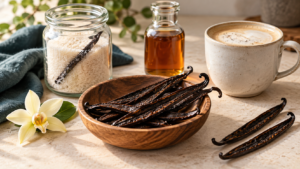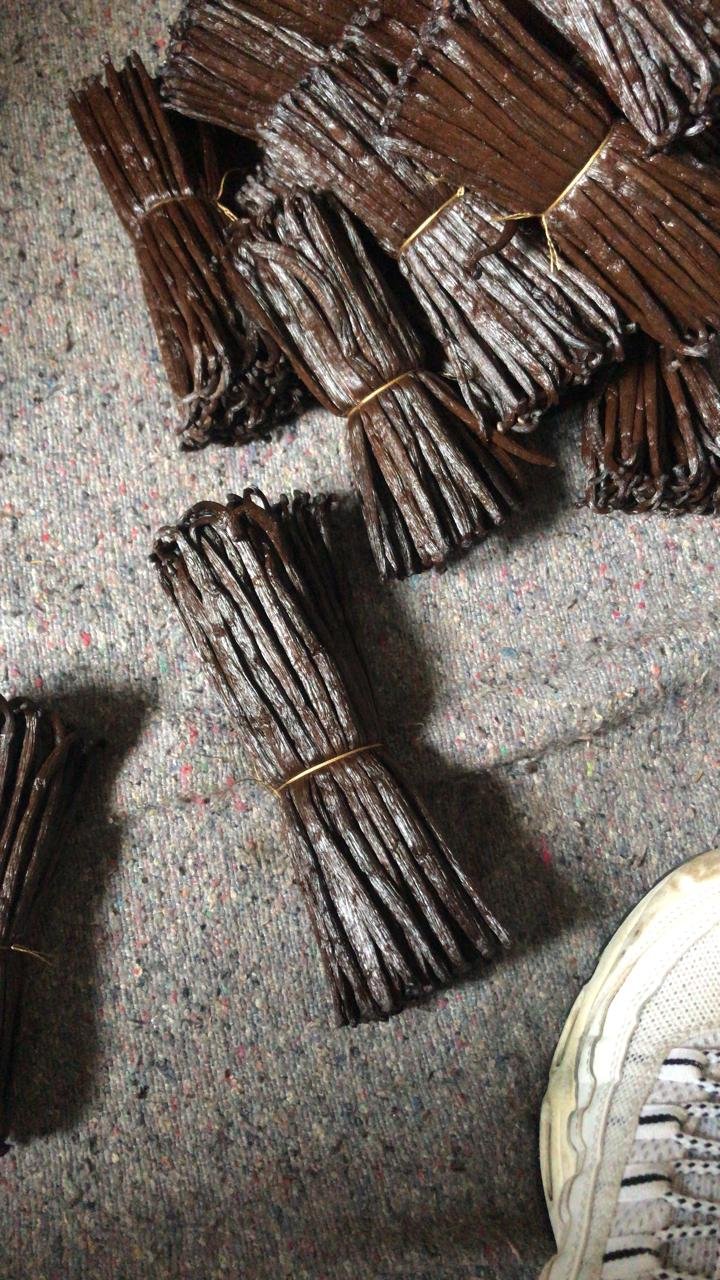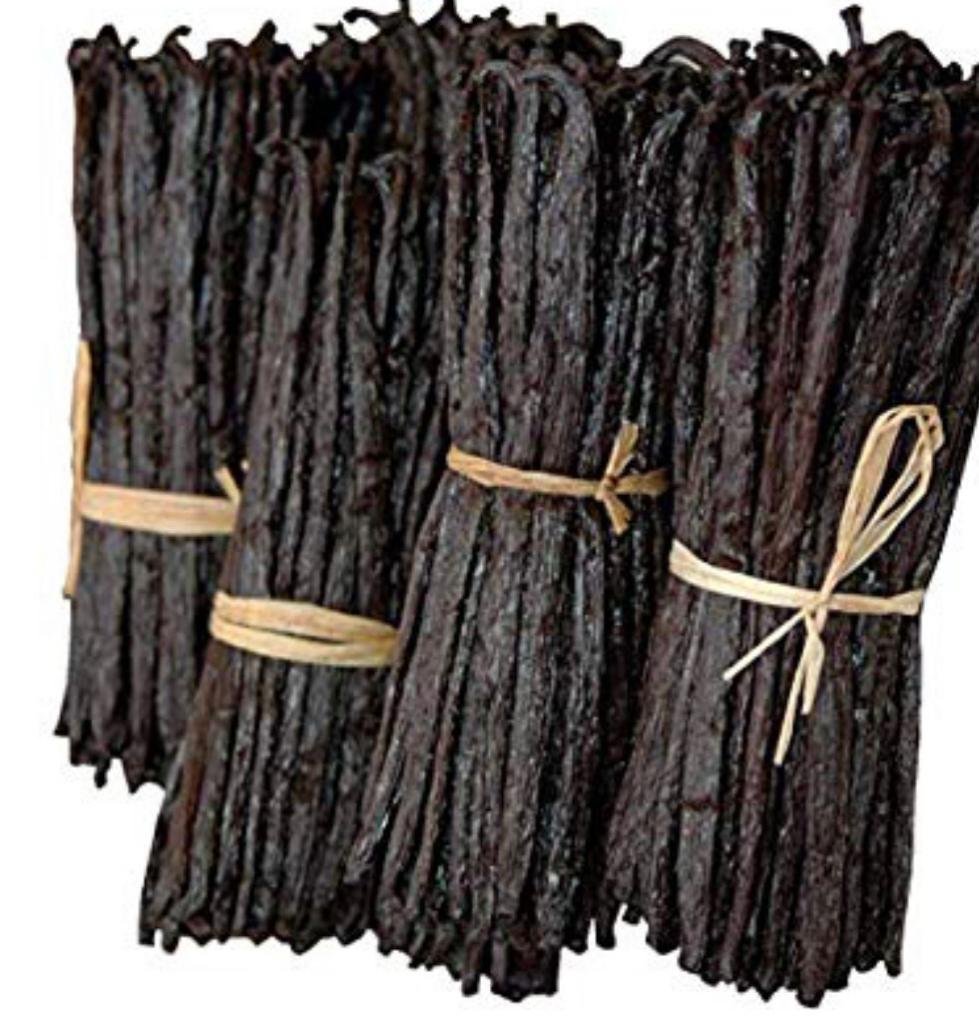
Split a vanilla bean in your kitchen, and its fragrance arrives immediately. Getting that aroma into the pod takes much longer. There are vines to train, flowers to pollinate, green pods to watch and harvested beans to cure.
The story of a Madagascar vanilla farm stretches across years, with important decisions made along the way. Understanding how vanilla beans are grown makes those dark, fragrant pods feel less ordinary. Behind each one is a sequence of patient tasks that connects an orchid flower to your favourite dessert.
Where Vanilla Farming in Madagascar Begins
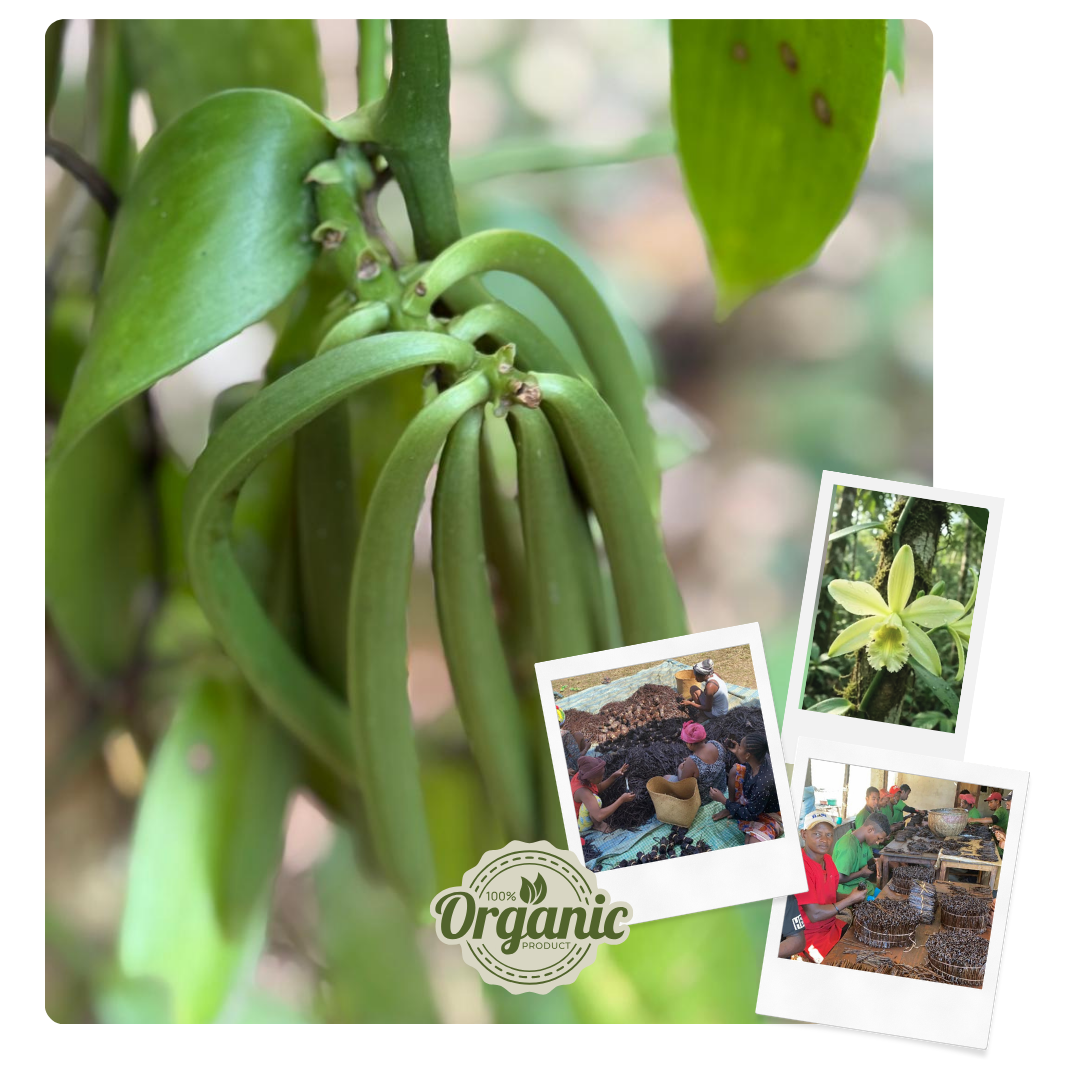
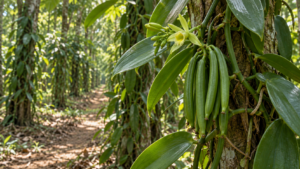
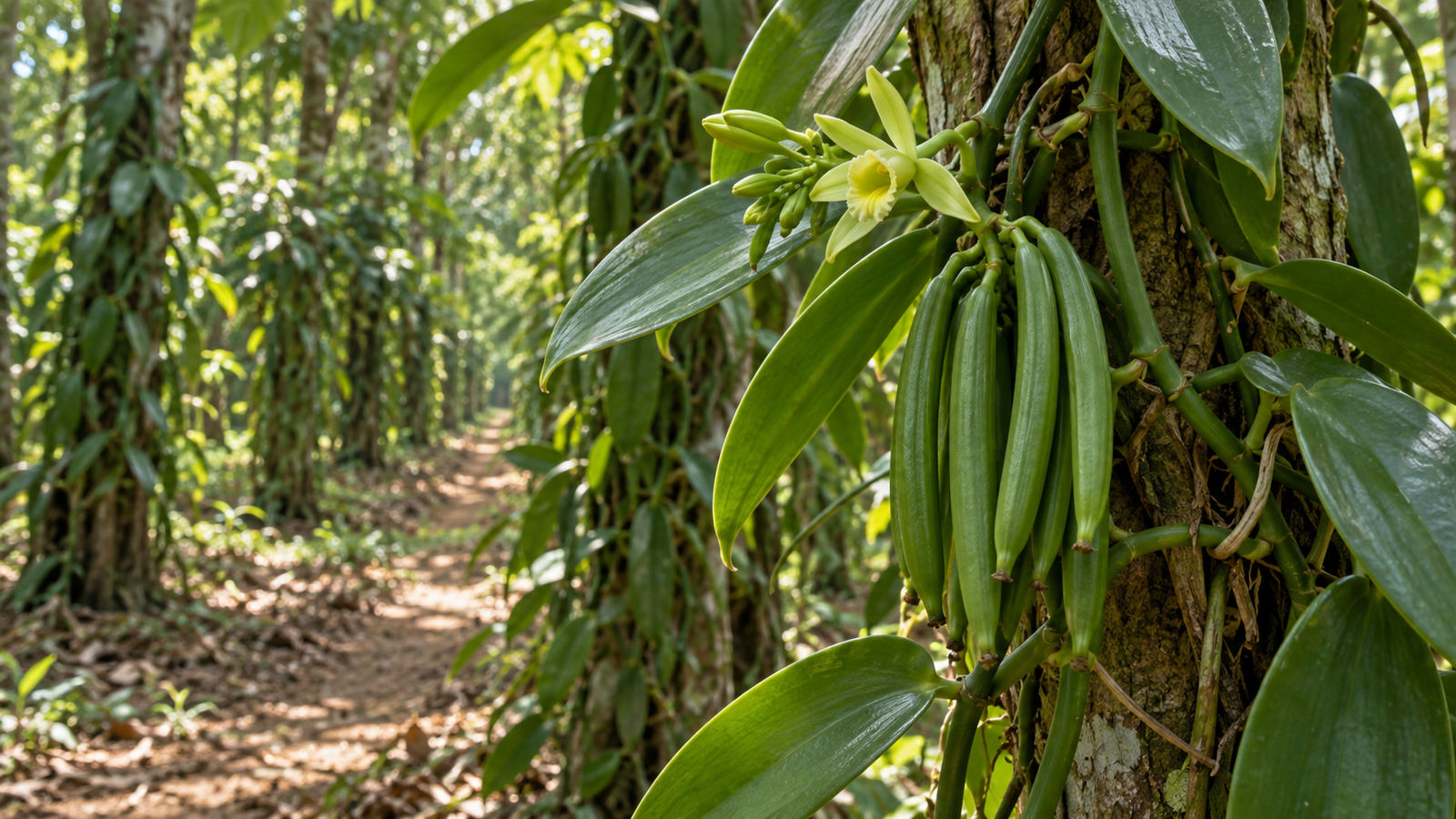
The northeastern SAVA region is a major centre of vanilla farming in Madagascar. Smallholder growers tend vines under tree cover, using supporting trees often called tutor trees. This arrangement gives the climbing plants support and helps manage their exposure to sunlight. Symrise’s Madagascar cultivation account describes this combination of shaded plots and skilled manual work.
Much of the familiar Madagascar crop is sold as Bourbon vanilla beans. For anyone buying vanilla, however, the origin name is only the beginning of the story. Growing conditions, harvest maturity and careful processing all deserve attention.
A farm’s calendar also extends beyond the harvest. Support trees need attention, vines need guiding, and the next crop depends on plants staying healthy between seasons. Growers may work with other crops alongside vanilla, spreading their activities across the year. Thinking about the farm this way helps explain why a bean’s journey cannot be reduced to its picking date: the work starts much earlier and continues after the pods leave.
Growing a Healthy Vanilla Vine
An Orchid with a Climbing Habit
Vanilla comes from an orchid, usually Vanilla planifolia, whose botanical origins lie in the tropical Americas. The “bean” is actually its seed capsule.
Farmers generally establish plants from vine cuttings. These need suitable support, filtered light and time to develop before flowering. Depending on the cutting and growing conditions, that wait can be around two to four years. The University of Florida’s vanilla growing overview explains this slow establishment period.
Keeping the Crop Within Reach
Vines can grow well beyond a convenient working height. Training and looping them brings developing growth within reach for tending and pollination.
Ground conditions matter too. Mulch supports the shallow root zone, while drainage helps prevent waterlogging. Throughout the growing cycle, farmers must balance moisture, shade and plant health. A productive farm requires regular attention long before any pods appear.
The Vanilla Orchid Flower: A Brief Opportunity
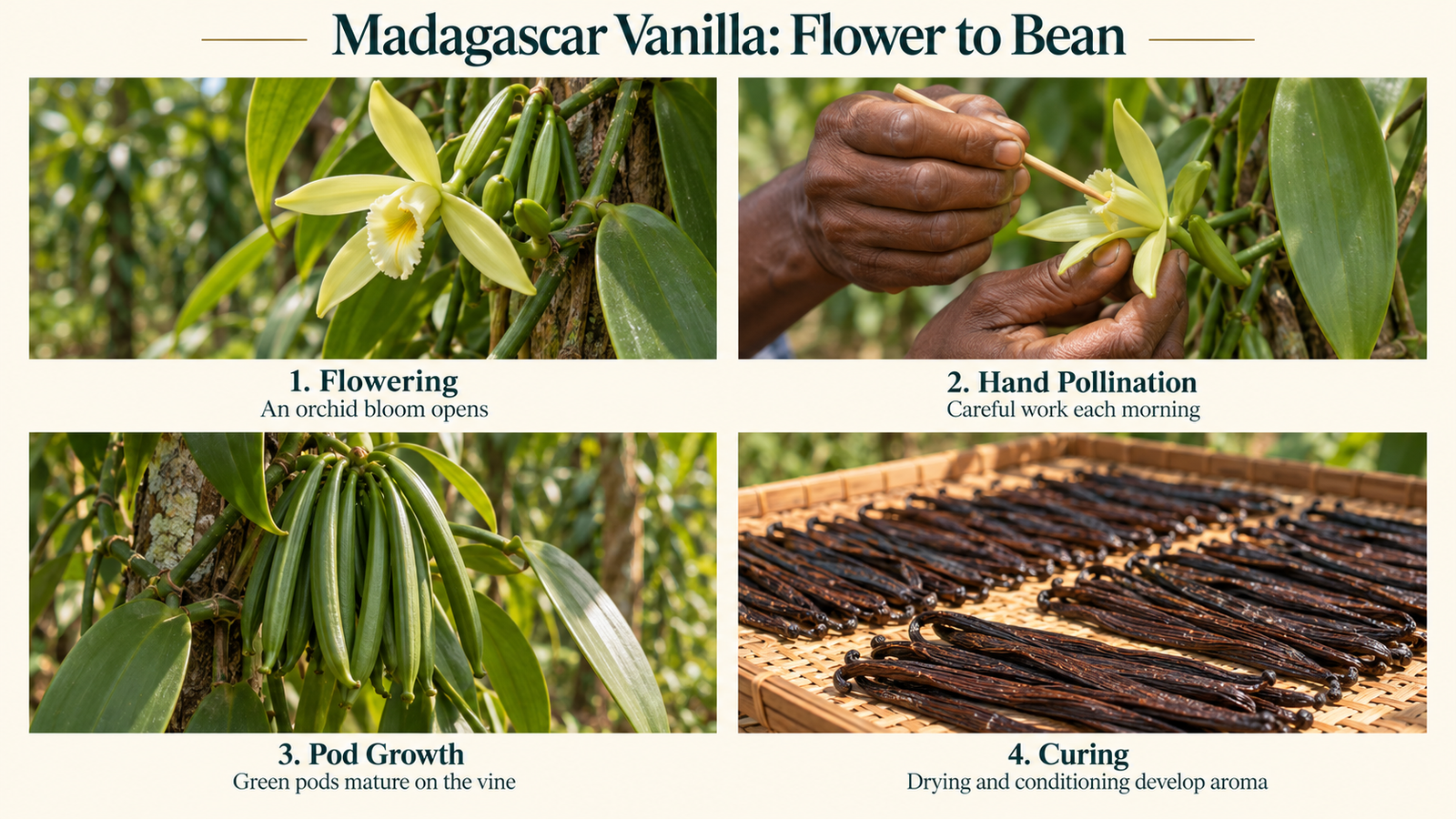
A vanilla orchid flower opens for just one day. During flowering season, growers check their vines for newly opened blooms, because the useful pollination window lasts only hours.
How Hand Pollination Works
Hand pollination of vanilla involves moving a small barrier called the rostellum, which separates the flower’s pollen from its receptive stigma. Using a slender implement, a skilled worker brings those parts together so pollination can occur.
Morning work is especially important. Flowers open progressively, so tending them means repeated visits throughout the flowering period. The University of Florida’s cultivation guide describes both the technique and the flower’s short lifespan.
This stage helps explain why vanilla beans are expensive. Every successful pod begins with a small, precise task performed at the right moment, alongside the wider work of keeping the vine healthy.
Vanilla Bean Harvesting Requires Patience
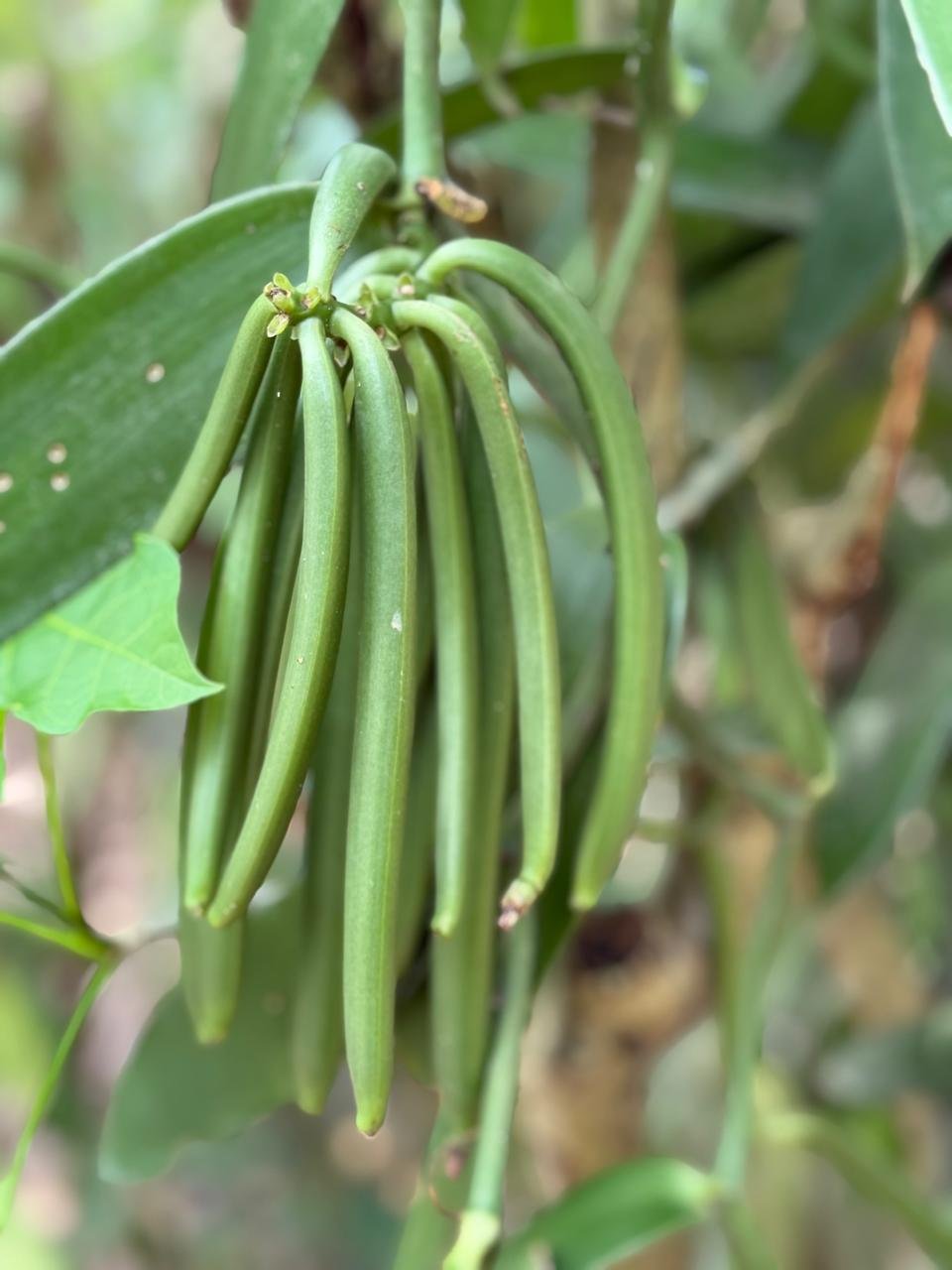
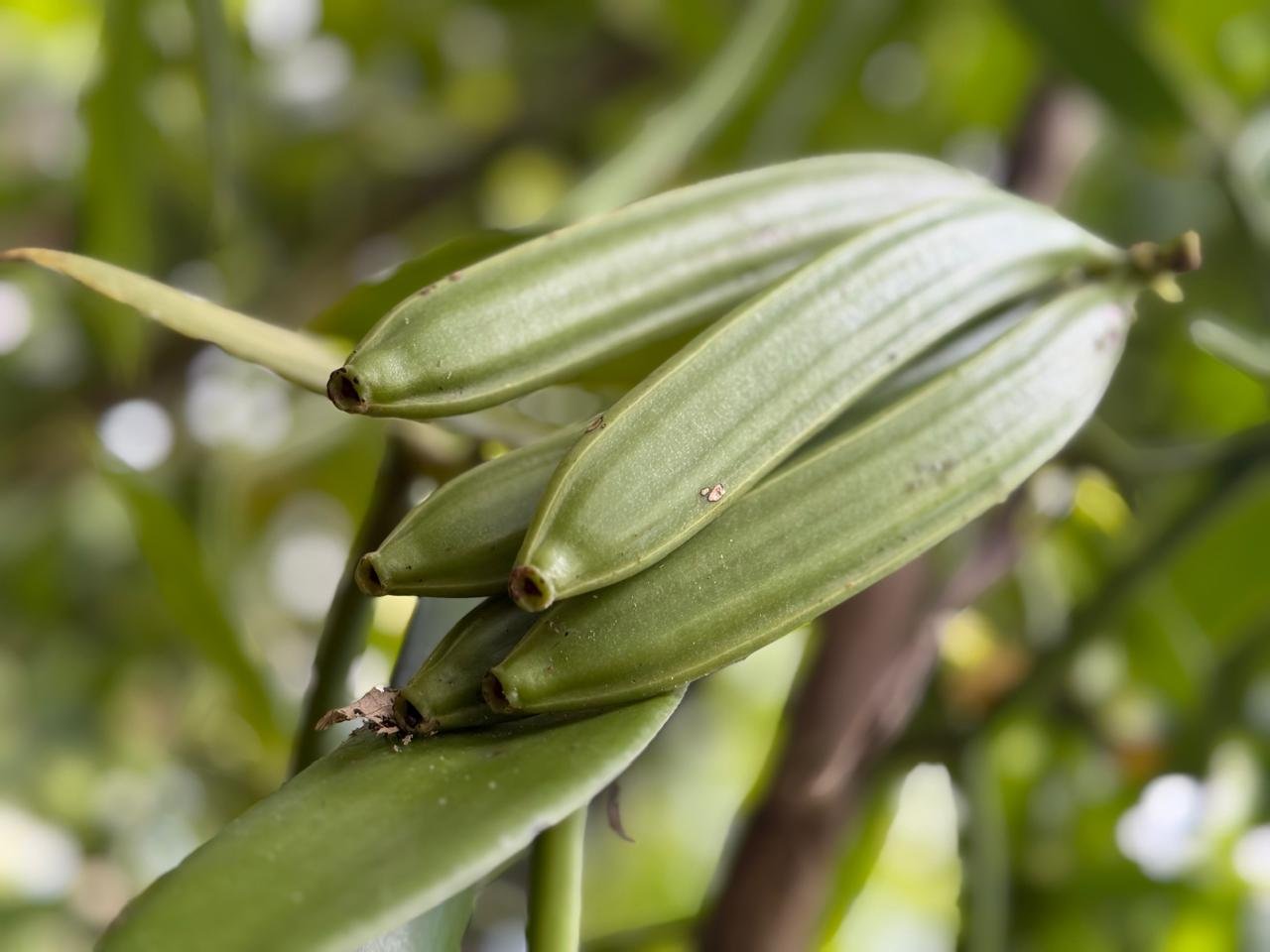
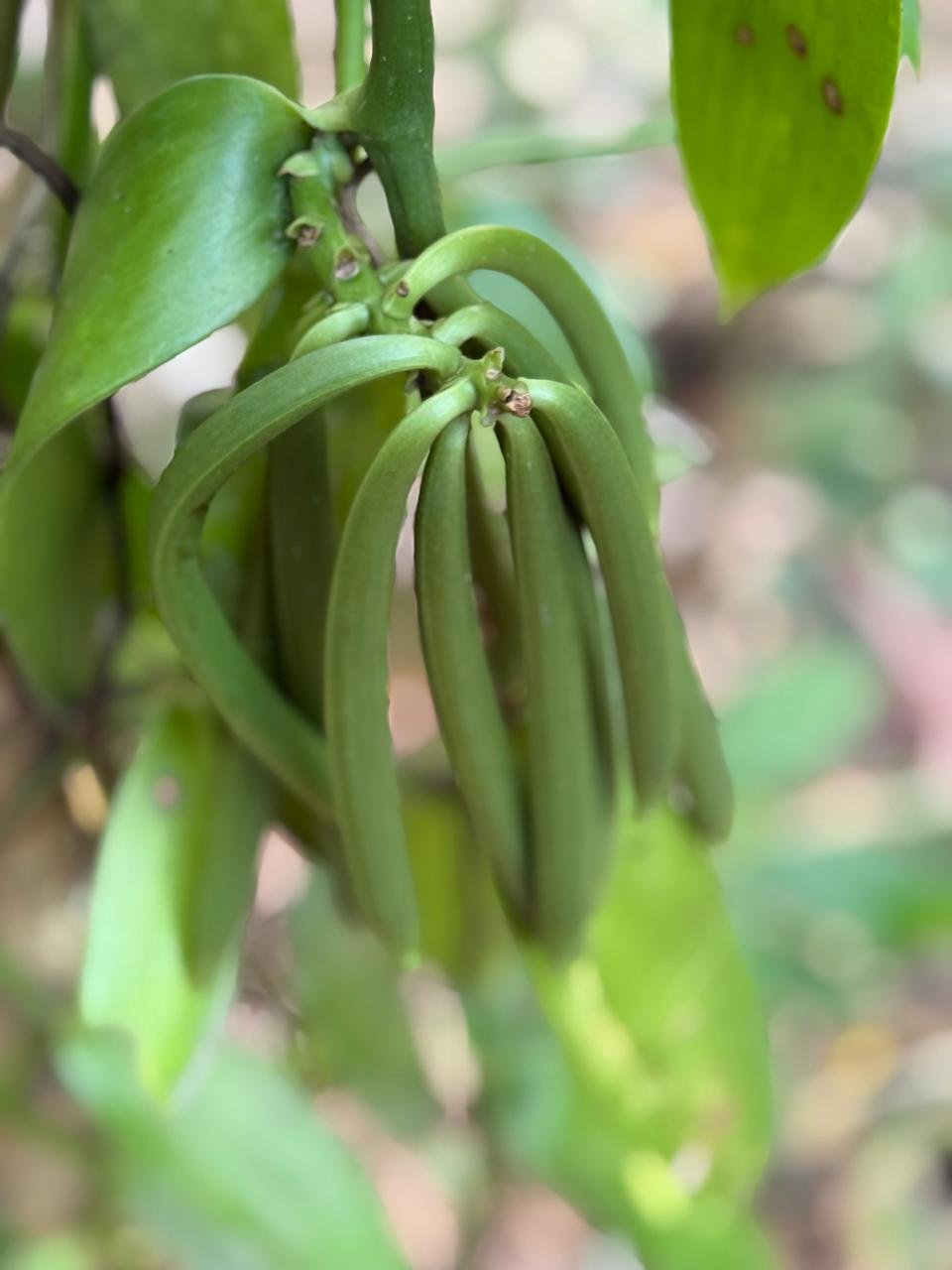
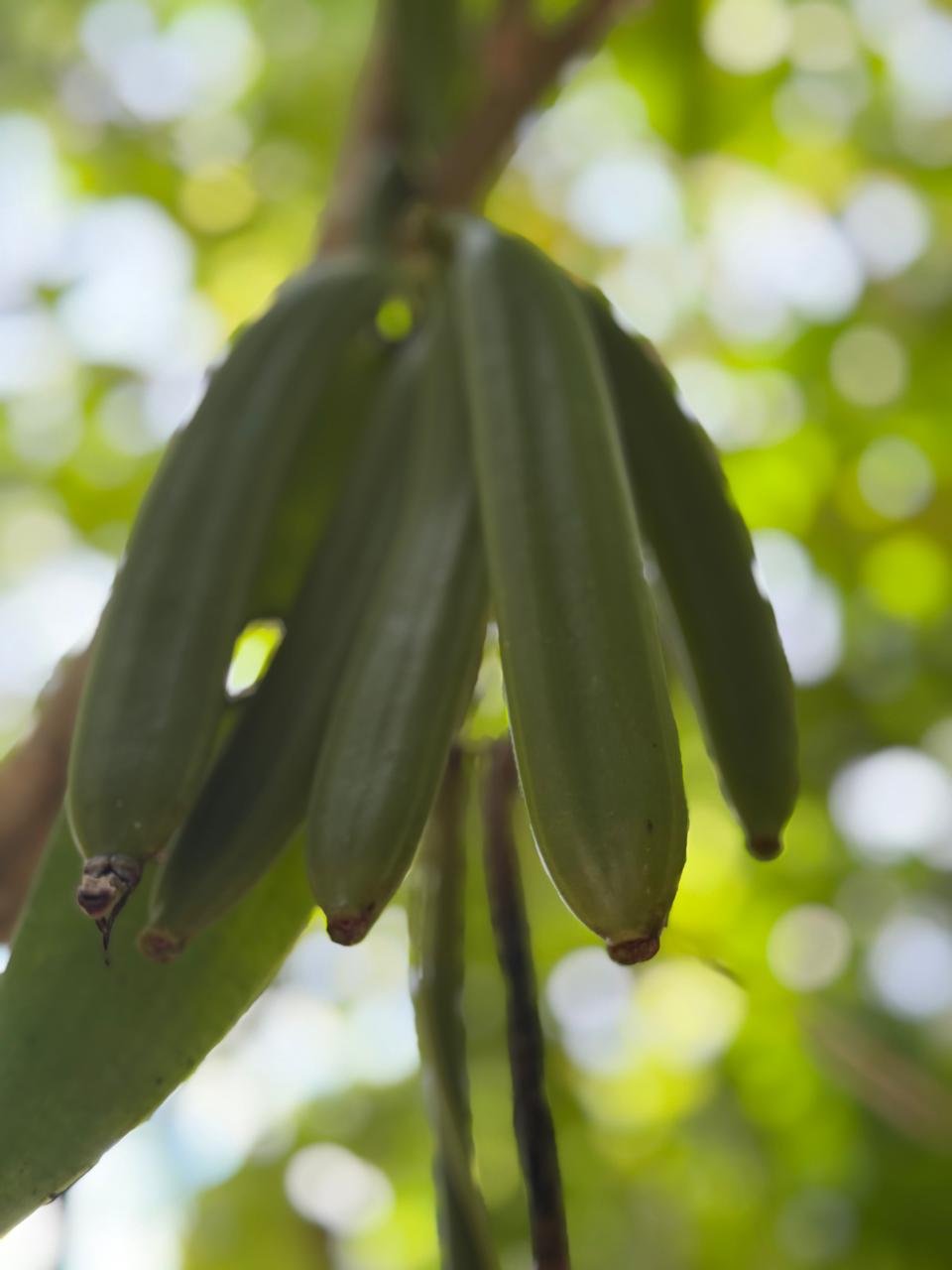
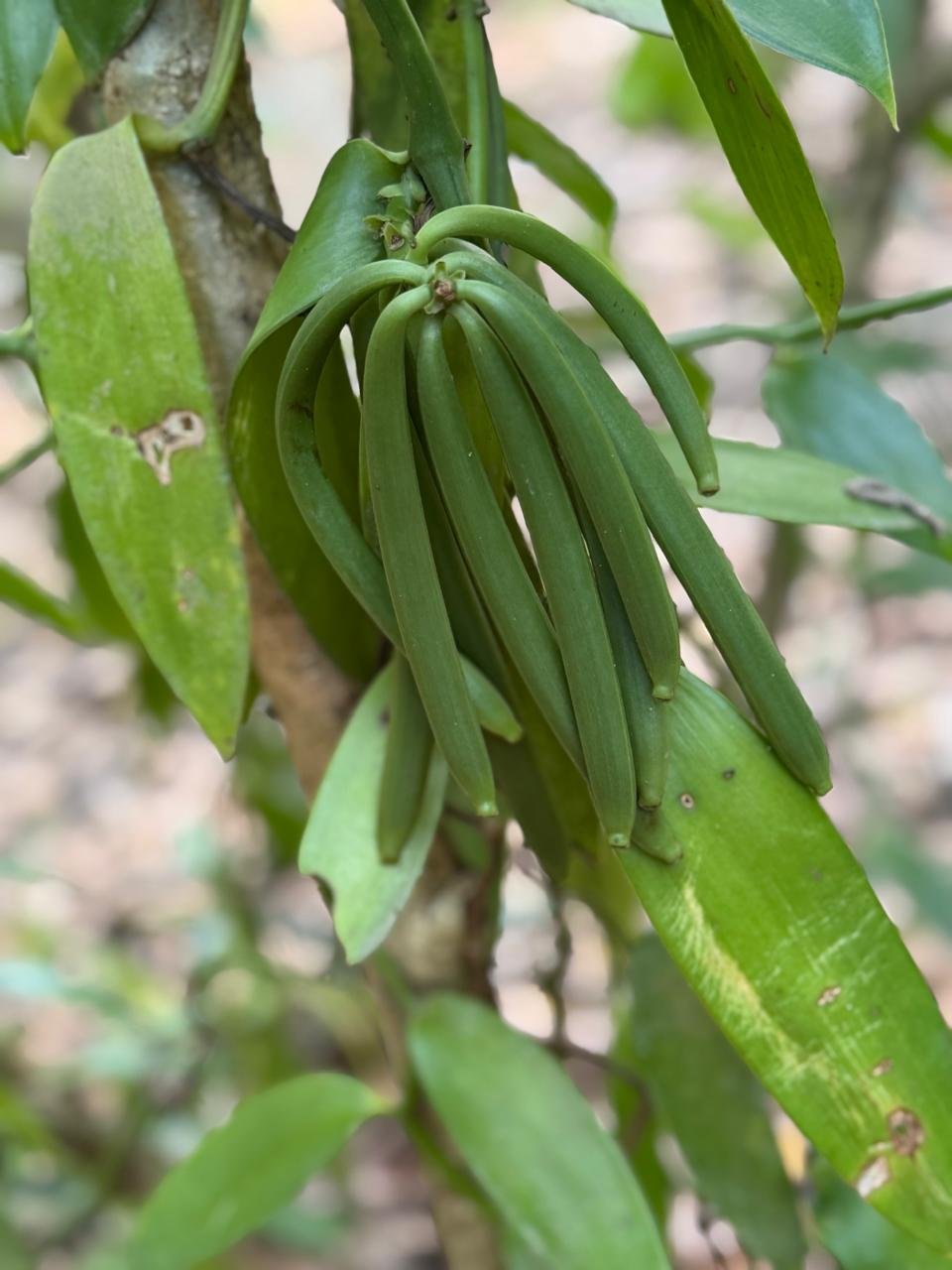
After successful pollination, the flower’s ovary develops into an elongated green pod. Typically, another eight to nine months pass before it reaches harvest maturity.
Length alone does not tell the whole story. A pod can look substantial while still developing the compounds needed for a good cured aroma. Harvesting too early limits its flavour potential.
Vanilla bean harvesting therefore requires attention to maturity across the crop. Freshly harvested pods also smell surprisingly different from kitchen vanilla. Their characteristic fragrance develops through curing, as outlined in the University of Florida’s vanilla processing guide.
The Vanilla Curing Process: Developing the Aroma
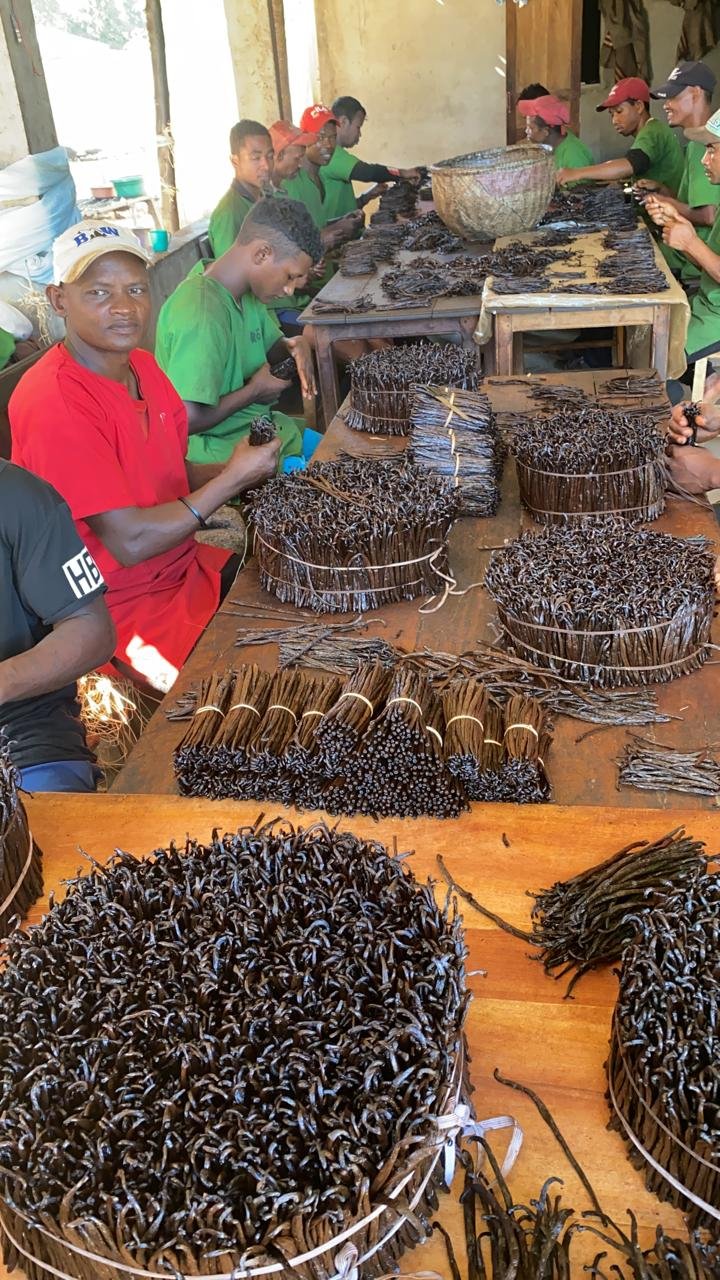
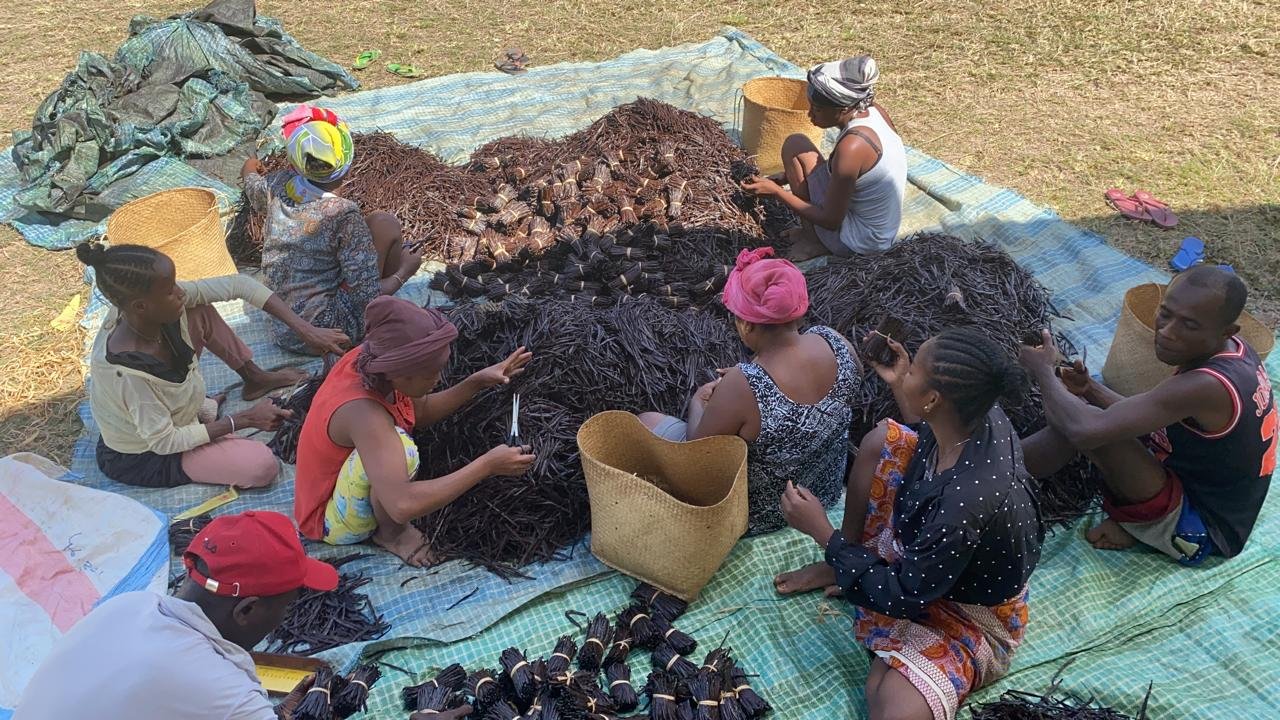
Curing can involve farmers, specialist processors or both. Methods and schedules vary, but four stages describe the essential journey.
1. Scalding
In a common method, mature green pods receive a controlled hot water treatment. This stops further growth and begins changes that allow the characteristic aroma to develop.
2. Sweating
The warm pods are held under insulating covers. During sweating, they darken and undergo biochemical changes. Enzymes help release vanillin from its precursor, glucovanillin. Vanillin is important, although other compounds also contribute to natural vanilla flavour.
3. Drying
Controlled exposure to sun and shade gradually removes moisture. Workers monitor the beans and adjust their handling to weather conditions. Drying must be managed carefully to avoid leaving excessive moisture or making the pods overly dry.
4. Conditioning
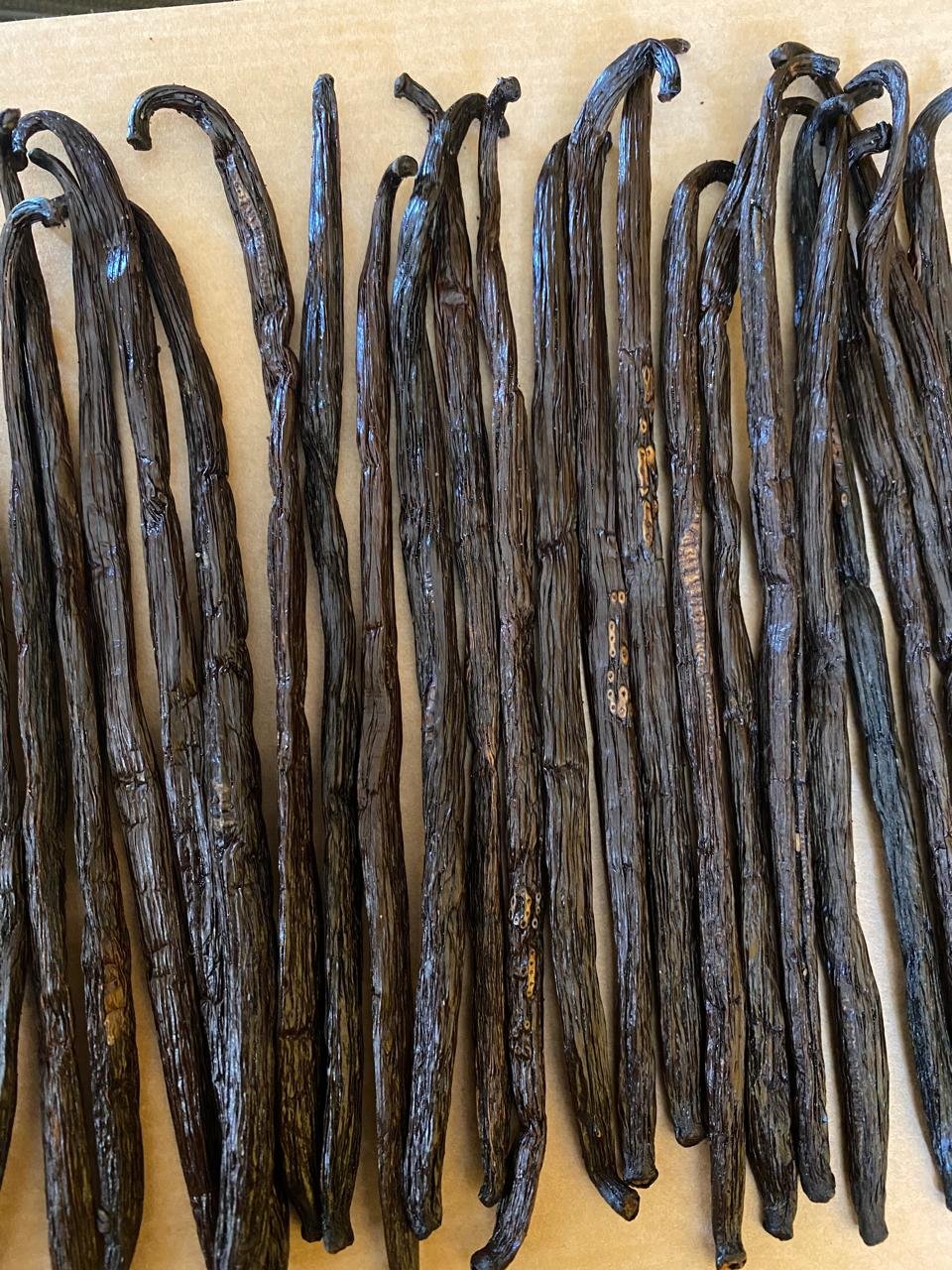
The beans rest under controlled storage conditions while their aroma develops further. Curing and conditioning together take months, requiring repeated checks along the way. Cook’s account of vanilla curing describes the close attention needed during drying and conditioning.
For a closer look at the fragrance itself, explore what gives vanilla beans their aroma.
What This Journey Means for Vanilla Bean Quality
Vanilla bean quality reflects decisions throughout the growing and curing cycle. A beautiful photograph cannot reveal harvest maturity, careful processing or the history of a particular batch.
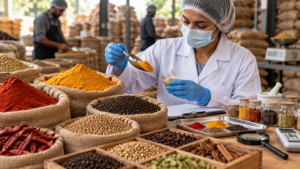
When choosing Madagascar vanilla beans, ask suppliers about origin, intended use and how they describe the product’s condition. Different applications may require different specifications, so choose with your recipe or production needs in mind.
If sustainably sourced vanilla matters to you, ask what supports that description. Traceability records and relevant certification details offer more useful information than an attractive farm image alone. The story should connect to evidence about the beans being sold.
Bringing Madagascar Vanilla into Your Kitchen
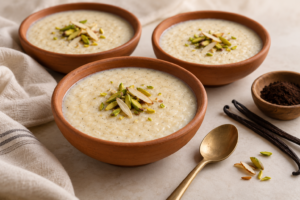
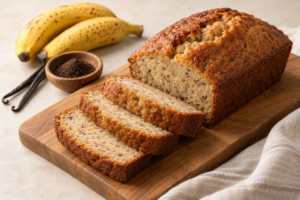
Simple desserts offer a lovely way to appreciate the finished ingredient. Try our vanilla bean ice cream recipe, where vanilla joins a creamy custard base.
For another option, our vanilla bean panna cotta recipe infuses cream with the seeds and pod before setting.
As you split the bean and scrape out its tiny seeds, consider the hands and time behind it. That familiar kitchen moment is the final stop in a much longer journey.