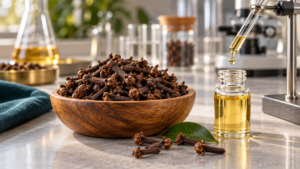
Two shipments of cloves can look almost identical and perform differently in production. One delivers the expected aroma or extraction output; the other requires more raw material to achieve the same result.
Eugenol in cloves helps explain their commercial value. However, buyers need two separate measurements: how much essential oil the cloves yield, and how much eugenol that oil contains. Understanding both helps procurement teams compare suppliers, estimate usable output and maintain consistent finished products.
What Is Eugenol, and Why Does It Matter?
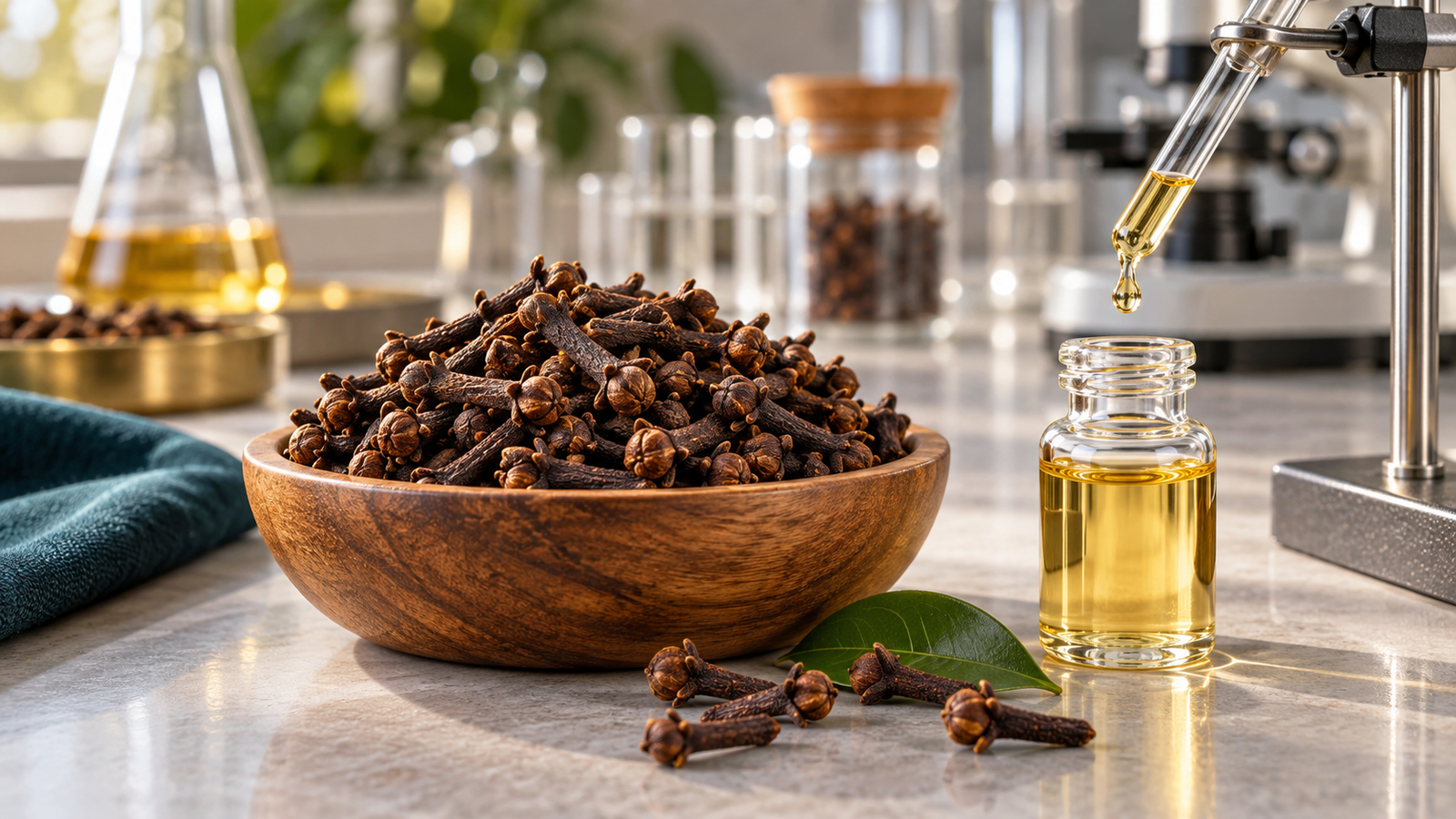
Eugenol is a naturally occurring phenolic compound responsible for much of cloves’ familiar warm, spicy aroma. Cloves are the dried flower buds of Syzygium aromaticum.
Clove oil contains several compounds, including eugenol, eugenyl acetate and beta-caryophyllene. The European Medicines Agency’s clove assessment describes eugenol as a major constituent. Its concentration does not describe the entire oil’s composition or suitability.
For food businesses, this chemistry influences flavour. For processors supplying pharmaceutical ingredients, it affects the amount of eugenol available for subsequent isolation and purification.
Research on clove oil has demonstrated antioxidant and antibacterial activity under controlled laboratory conditions. For example, a laboratory study examined clove oil and hydrogels incorporating it. Such findings support early formulation development work; they do not establish clinical efficacy or preservation performance in every finished product.
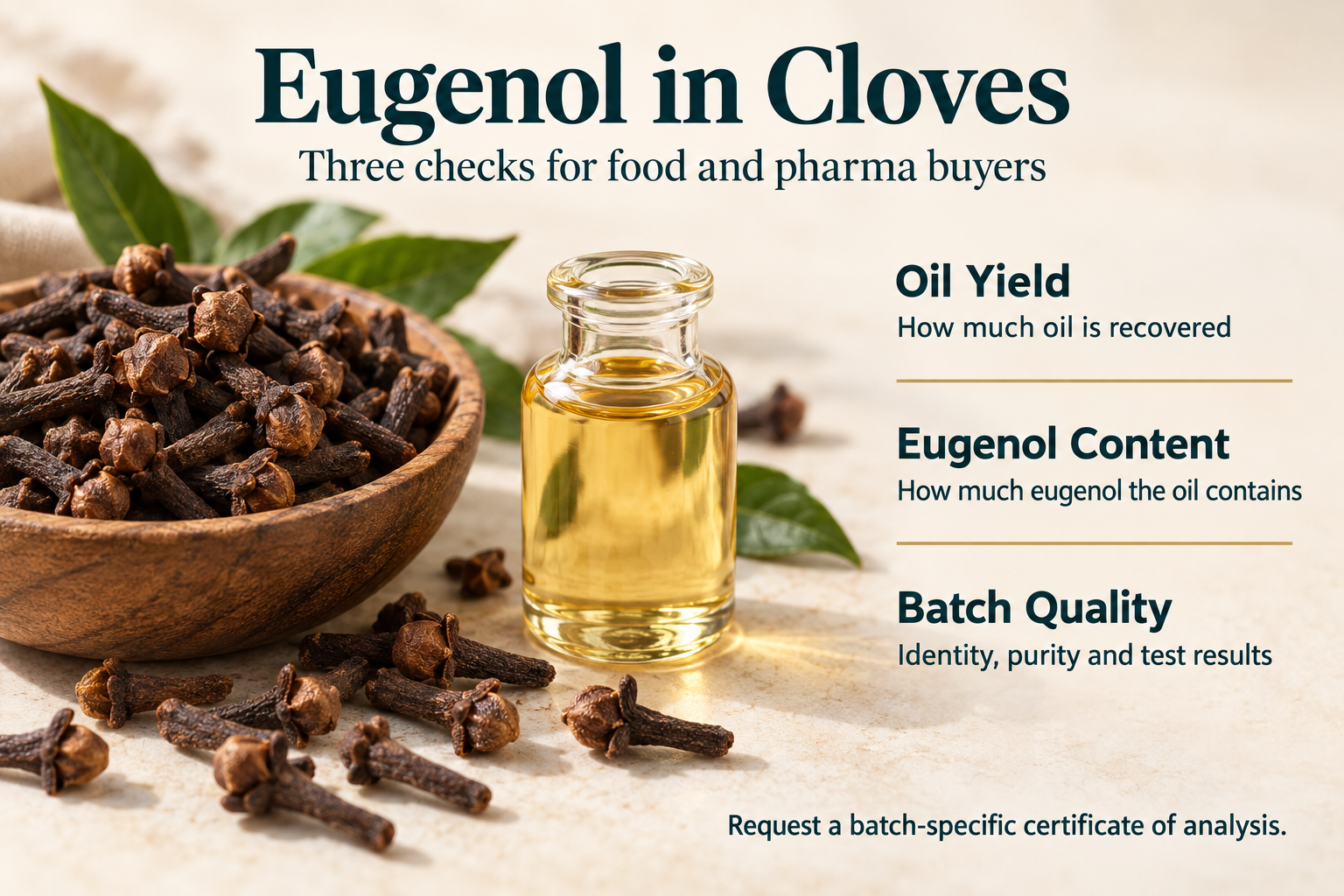
Clove Essential Oil Yield and Eugenol Content Are Different
Oil Yield Measures Extractable Output
Clove essential oil yield describes the oil recovered from a specified quantity of cloves using a stated method. Results depend on the material and extraction conditions.
A clove distillation study demonstrated that processing and oil separation affected recovery. Buyers should therefore compare results obtained under equivalent conditions, including the test method and moisture basis.
Eugenol Content Measures Oil Composition
Eugenol content in clove oil describes eugenol’s proportion within the recovered oil. A lot can have a higher eugenol percentage yet deliver less total eugenol because its oil yield is lower.
Also check units. Oil reported in millilitres per kilogram cannot be treated directly as a mass percentage. A chromatographic peak-area percentage is likewise not automatically a validated mass assay.
Why High Oil Content Cloves Can Offer Better Value
Consider two hypothetical lots, each containing 1,000 kilograms of cloves. The following figures use the same as-received basis, with oil yield and eugenol concentration both expressed by mass.
| Measurement | Lot A | Lot B |
|---|---|---|
| Essential oil yield | 12% | 18% |
| Eugenol in recovered oil | 85% | 80% |
| Oil output | 120 kg | 180 kg |
| Eugenol contained in oil | 102 kg | 144 kg |
Lot B contains 42 kilograms more eugenol in the recovered oil, despite its lower eugenol concentration. These are illustrative calculations, not supplier specifications or guaranteed factory results.
Commercial clove oil extraction involves additional recovery losses and costs. Compare landed purchase price, utilities, labour, purification and rejected material against the quantity that ultimately meets your specification.
In principle, higher yield means fewer cloves are needed for a target quantity of oil. This can reduce raw material handling and spent biomass per unit of output. Confirm these potential advantages through pilot runs, because equipment performance and processing costs can change the outcome at the intended production scale.
For buyers evaluating wholesale cloves for extraction, cost per kilogram of acceptable output is more useful than purchase price alone.
Eugenol for Pharmaceutical Applications
Specify the Material Your Process Actually Needs
Pharmaceutical procurement may involve whole cloves, clove bud oil or purified eugenol. These are distinct materials with different specifications.
The EMA’s clove oil monograph addresses traditional medicinal uses, including temporary toothache relief. This does not establish that any commercial clove oil is suitable for a finished medicine.
Assess identity, assay, relevant impurities, stability and compatibility with the intended formulation. Where the material is manufactured as an active pharmaceutical ingredient, applicable controls extend beyond oil content; FDA’s ICH Q7 guidance explains the quality systems involved.
Value Consistency Alongside Concentration
A predictable supply helps production teams control extraction, purification and formulation. Review several recent batches before agreeing to a long contract. A single excellent sample cannot show the supplier’s normal operating range.
Ask how changes in origin, raw material or processing are communicated before delivery.
Clove Oil for Food Manufacturers
Balance Flavour Strength with the Finished Recipe
Food buyers need a repeatable sensory profile. More intense clove character may support efficient flavouring, but excessive addition can overwhelm other ingredients.
Our vanilla chai latte recipe with cloves shows cloves working alongside tea, ginger, cinnamon and cardamom. It offers a useful starting point for thinking about balanced spice combinations.
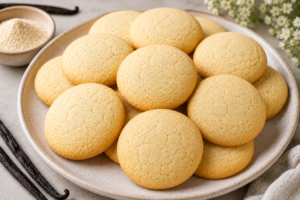
For bakery trials, our Christmas vanilla bean cookies recipe provides a vanilla base for evaluating a proposed clove variation. The published recipe contains no cloves; any addition needs separate sensory testing.
Match the Ingredient to Its Intended Use
The FDA’s eugenol inventory entry identifies its flavouring function. Buyers must still check the applicable conditions for their product and destination market.
Food formulation should assess flavour, dispersion and performance during processing and storage. For distillers considering complementary botanicals, our guide to whole vanilla beans for craft gin explores another ingredient sourcing decision.
Clove Oil Quality Testing Before a Bulk Order
Confirm Identity and Measured Performance
Clove bud oil quality should be assessed against an agreed specification. Confirm the botanical identity and plant part; bud, leaf and stem oils should not be substituted without qualification.
Request the oil yield method, reporting units and an appropriate validated eugenol assay. A full chromatographic profile can support identity assessment beyond one headline percentage.
Review Safety, Authenticity and Traceability
Your clove oil certificate of analysis should identify the actual batch, methods, acceptance limits and results. Select contaminant testing appropriate to the material, processing route and intended use, including relevant pesticide residues, elemental contaminants and microbiological quality.
For broader supplier screening, read our spice adulteration detection guide for food quality managers. Visual inspection should support analytical verification, rather than replace it.
Make Bulk Clove Sourcing More Predictable
Before requesting a quotation from Vrishabha Organics, prepare your required quantity, destination, intended application and acceptance criteria. Ask which batch documents and representative samples are available.
Agree on packaging, storage, sampling and handling of nonconforming deliveries. Clear requirements help both sides determine whether a proposed lot fits the manufacturing process.