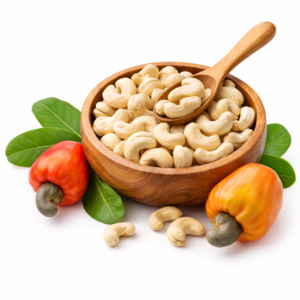
For global food manufacturers, importers, and procurement directors, the integrity of raw agricultural imports dictates downstream brand reputation and consumer trust. In the realm of tree nuts, few commodities demand as much technical oversight during primary manufacture as the cashew. Mastering organic cashew processing requires an acute understanding of how peeling methods directly affect cellular structure, appearance, and shelf life. While legacy industrial models often relied on caustic chemical baths, modern quality-assurance protocols prove that advanced steam-peeling is vastly superior for protecting high-value global inventories. At Vrishabha Organics, we examine the technical nuances separating chemical shortcuts from true artisanal and certified organic excellence.
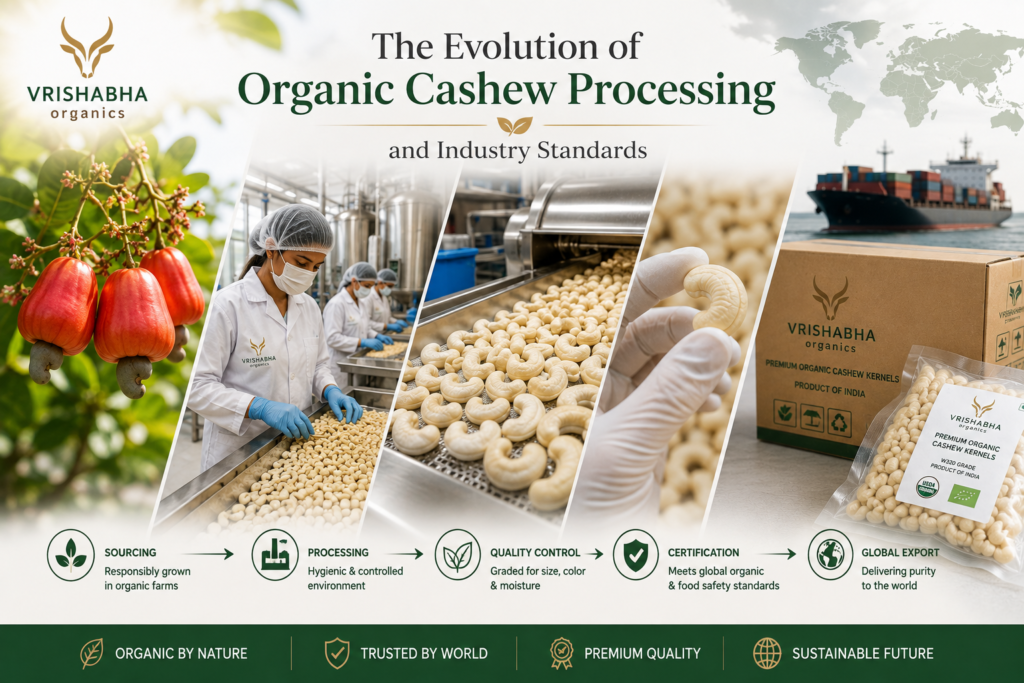
The Evolution of Organic Cashew Processing and Industry Standards
The Legacy of Chemical Peeling and Its Hidden Risks
Historically, high-volume processing facilities utilized concentrated sodium hydroxide (caustic soda) solutions to break down the stubborn outer testa encasing the inner kernel. While efficient for mass production, this chemical immersion method frequently leaves microscopic alkaline residues on the nut surface. Furthermore, harsh chemical reactions can strip natural antioxidants, accelerate lipid oxidation, and degrade the delicate outer layer of the kernel.
The Rise of Certified Organic Specifications
Today’s international markets demand absolute transparency and uncompromised chemical purity. Certified organic cashew processing completely prohibits synthetic solvents, artificial bleaching agents, and chemical catalysts during peeling and drying phases. Importers must audit origin facilities to ensure that mechanical or thermal methods are used exclusively, protecting both the consumer’s health and the organic certification status of the final product.
How Organic Cashew Processing via Steam-Peeling Protects Kernel Integrity
Thermal Dynamics and Moisture Control
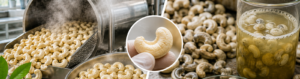
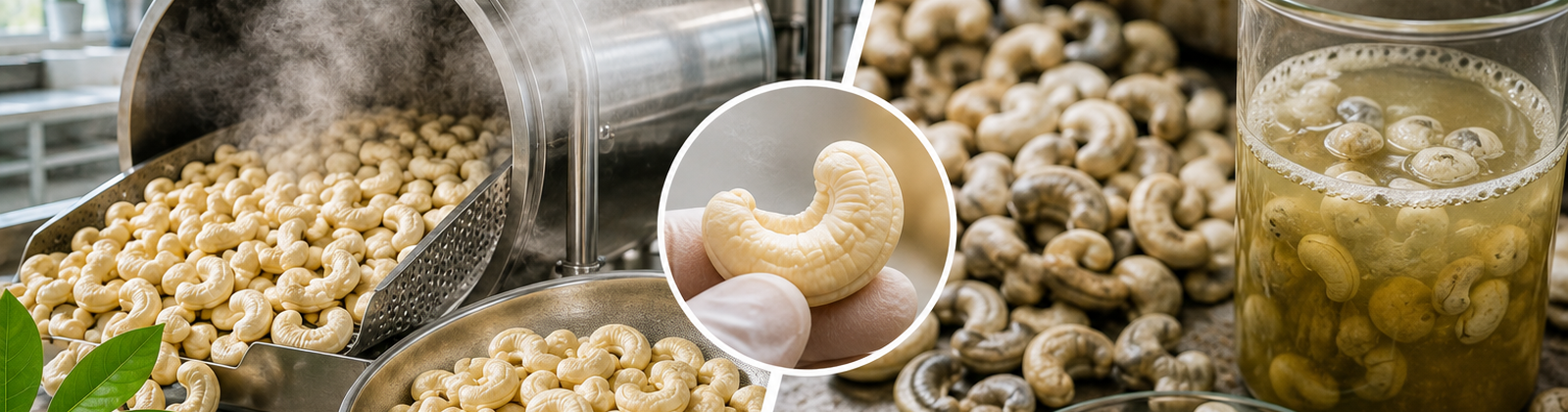
Steam-peeling utilizes controlled, pressurized steam chambers to loosen the outer skin without compromising the kernel’s internal matrix. This method exposes raw kernels to short bursts of thermal energy, causing the moisture inside the testa to expand and cleanly separate the skin. Optimal processing maintains internal kernel moisture levels strictly between 3% and 5%, preventing both structural brittleness and microbial vulnerability.
Preserving Nutritional and Organoleptic Profiles
By avoiding harsh chemicals, steam-peeling preserves the rich concentration of heart-healthy monounsaturated fats, plant-based proteins, and essential minerals inherent in high-grade cashews. The natural buttery flavor and creamy texture remain unadulterated, providing an optimal sensory profile for both direct retail consumption and industrial food formulations like plant-based milks and cheeses.
Comparative Analysis: Steam-Peeling vs. Chemical Processing
Impact on Raw Cashew Kernel Quality and Global Export Standards
AFI Grading and Defect Tolerances
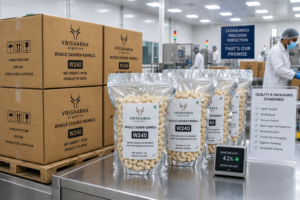
Global procurement relies heavily on Association of Food Industries (AFI) grading guidelines to classify kernels based on size, color, and defect limits. Maintaining optimal raw cashew kernel quality starts at the peeling stage; mechanical cracking combined with precision steam-peeling minimizes surface scratches, scoring, and chipping. Importers evaluating shipments must cross-reference outturn reports against baseline defect thresholds to avoid costly cargo rejections at destination ports.
Shelf Life and Rancidity Prevention
Chemical residues left from inferior processing methods act as catalysts for free fatty acid development, accelerating rancidity during ocean transit. Steam-processed kernels exhibit superior stability, maintaining low peroxide values even after extended warehousing. This enhanced durability makes them ideal for inclusion in our curated organic dried fruits collection designed for long-distance international trade.
Risk Mitigation Strategies for Commercial Importers
Port-of-Discharge Inspection Protocols
Relying solely on warehouse arrivals for damage assessment introduces significant financial exposure. Commercial importers should mandate independent surveyor assessments (such as SGS or Geo-Chem inspections) directly at the port of discharge. Documenting container compromise or excessive cashew kernel breakage rates immediately upon un-stuffing is essential for executing marine insurance claims and issuing supplier debit notes.
Supply Chain Traceability and Origin Partnerships
Mitigating transit loss begins at the source through audited farm-to-port supply networks. Partnering with origin-certified exporters ensures compliance with international grading tolerances and export specifications. Review our curated organic dried fruits collection engineered to meet the stringent demands of global trade markets.
Securing Your Supply Chain Through Vrishabha Organics
Sourcing premium cashews requires partnering with origin-certified processors who prioritize mechanical and steam innovations over chemical expediency. Vrishabha Organics delivers rigorously audited, export-grade inventories engineered to meet the stringent demands of international food manufacturers and distributors. Explore our flagship inventory of bulk cashew kernels to elevate your commercial product line with uncompromised quality.
Ready to optimize your procurement pipeline? Submit your commercial specifications and connect directly with our trade desk through the Vrishabha Organics B2B wholesale portal for tailored supply agreements.
Quick FAQ's
Steam-peeling uses controlled, pressurized steam to thermally loosen the outer testa without chemical intervention, whereas chemical processing immerses raw nuts in caustic soda baths to dissolve the skin. Steam-peeling preserves natural kernel integrity, while chemical methods risk surface residue and lipid degradation.
True organic processing eliminates chemical catalysts and alkaline residues that accelerate rancidity, resulting in lower peroxide values and stable free fatty acid levels. This ensures extended shelf life and better resistance to degradation during international ocean freight.
The ideal moisture content for commercially exported cashew kernels ranges tightly between 3% and 5%. Maintaining this specific threshold prevents microbial growth while avoiding excessive brittleness that leads to transit breakage.
Yes, steam-peeling and mechanical sorting fully comply with global organic regulations, such as USDA NOP and EU organic standards, because they exclude synthetic solvents, chemical bleaching agents, and artificial preservatives.
Procurement managers can request comprehensive batch analysis reports, origin certifications, and pre-shipment quality inspection documents directly by contacting the Vrishabha Organics B2B wholesale team.