In the global dry fruit trade, supply chain efficiency dictates wholesale margins, making the mitigation of cashew kernel breakage rates a critical operational metric for commercial importers. As bulk shipments traverse complex multi-modal transit corridors, exposure to mechanical vibration, shifting thermal gradients, and sub-optimal packaging can severely compromise cargo value. At Vrishabha Organics, we deliver trade-level market intelligence to help B2B buyers navigate logistics friction, protect wholesale valuations, and enforce rigorous quality standards across international supply chains.
Assessing Cashew Kernel Breakage Rates in Global Supply Chains
The Mechanics of Transit Damage in Bulk Commodities
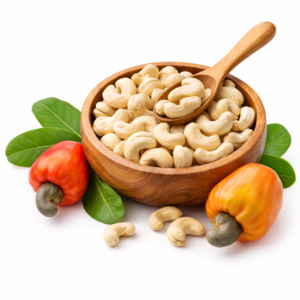
Transit damage in international agricultural freight is driven by dynamic mechanical stresses, improper stowage configurations, and maritime humidity fluctuations. Compared to denser tree nuts, cashew kernels possess a brittle cellular structure that makes them highly susceptible to impact fracture during prolonged ocean transit. Unmitigated transit damage dry fruits translates directly into financial loss, shifting premium whole grades into discounted broken or split classifications on the trading floor.
AFI Grading Benchmarks and Acceptable Tolerance Thresholds
International commercial contracts operate under strict Association of Food Industries (AFI) and global trade standards. For prime white whole grades, commercial agreements typically mandate that defective or broken kernel parameters remain strictly under the 5% ceiling. Routine auditing of cashew kernel breakage rates upon port discharge provides importers with the empirical data needed to enforce supplier compliance and uphold quality benchmarks.
Technical Logistics: Optimizing W240 Cashew Shipping and Protective Packaging
Advanced Packaging: Flexibags, Hermetic Tins, and Vacuum Sealing
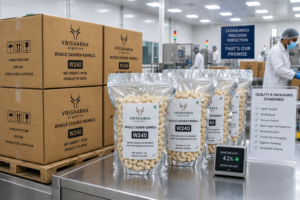
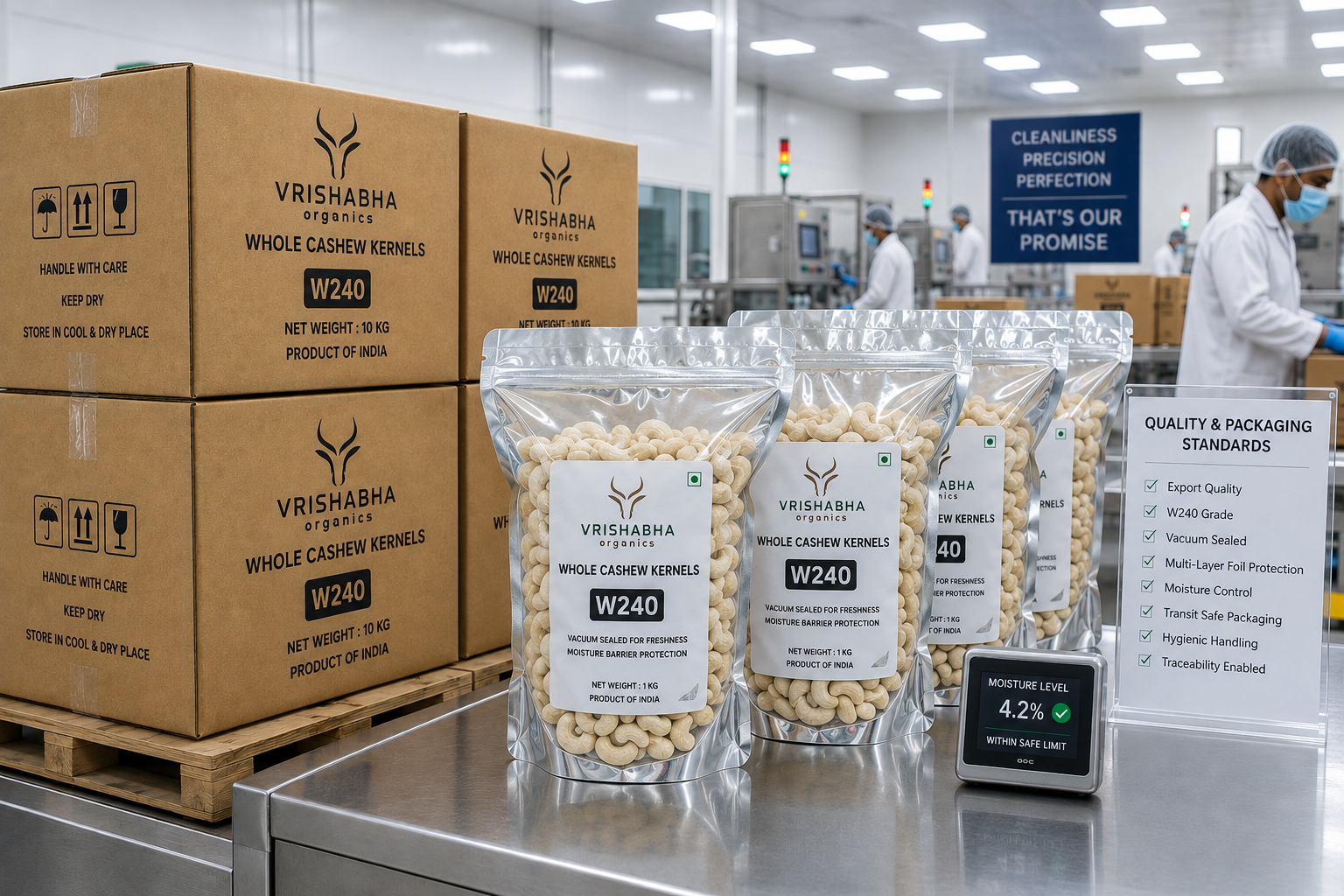
Packaging innovation remains the primary line of defense against physical degradation during transit. Standard commercial W240 cashew shipping increasingly relies on vacuum-sealed, multi-layer aluminum foil pouches flushed with inert gases like nitrogen to immobilize kernels and prevent friction. For high-end retail and industrial distribution, rigid hermetic tin containers offer absolute crush resistance, neutralizing external compression pressures in stacked cargo holds.
Humidity Management and Condensation Control
Container “sweat”—caused by temperature differentials across maritime climate zones—poses a persistent threat to bulk agricultural products. When relative humidity levels inside a dry freight container exceed 65%, moisture accumulation softens the kernels, drastically increasing their vulnerability to structural crushing. Deploying industrial desiccants and container liner systems is mandatory to safeguard your bulk cashew kernels against moisture-induced failure.
Processing Intelligence: Factory-Level Determinants of Cashew Kernel Breakage Rates
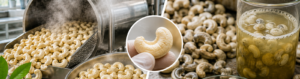
The structural resilience of a cashew kernel is fundamentally established during primary origin processing. Modern commercial facilities utilizing advanced steam-peeling protocols preserve kernel cellular integrity significantly better than legacy chemical or high-heat roasting methods. Importers must vet supply partners to ensure rigorous post-peeling mechanical sorting removes hairline fractures prior to export-grade vacuum packing.
Risk Mitigation Strategies for Commercial Importers
Port-of-Discharge Inspection Protocols
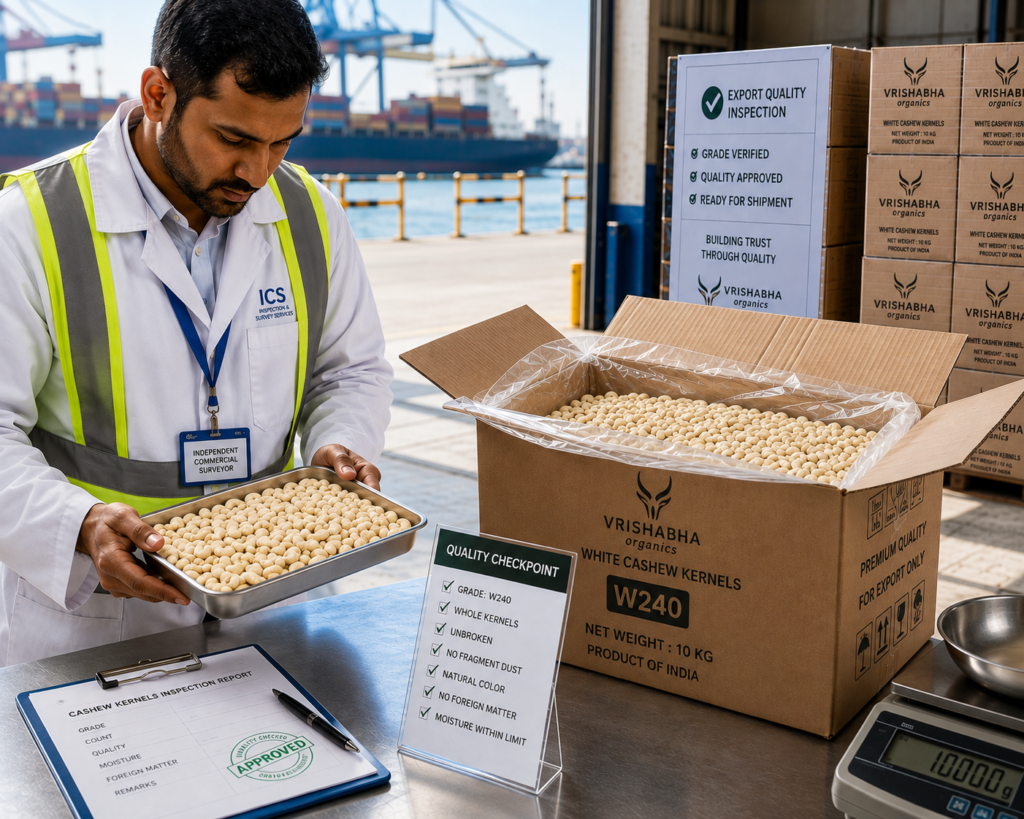
Relying solely on warehouse arrivals for damage assessment introduces significant financial exposure. Commercial importers should mandate independent surveyor assessments (such as SGS or Geo-Chem inspections) directly at the port of discharge. Documenting container compromise or excessive cashew kernel breakage rates immediately upon un-stuffing is essential for executing marine insurance claims and issuing supplier debit notes.
Supply Chain Traceability and Origin Partnerships
Mitigating transit loss begins at the source through audited farm-to-port supply networks. Partnering with origin-certified exporters ensures compliance with international grading tolerances and export specifications. Review our curated organic dried fruits collection engineered to meet the stringent demands of global trade markets.
Secure Your Supply Chain with Vrishabha Organics
Protecting your wholesale portfolio requires uncompromising agricultural quality combined with superior export-grade packaging engineering. Vrishabha Organics delivers rigorously tested, premium-grade cashews and gourmet ingredients tailored for international distributors, wholesalers, and food manufacturers. Connect with our commercial desk today through the Vrishabha Organics B2B wholesale portal to secure custom specifications for your upcoming shipping schedules.
Quick FAQ's
Under established international trade guidelines, acceptable broken or damaged kernel tolerances for prime W240 grades typically range between 3% and 5%. Breaches above this threshold typically trigger marine insurance claims or commercial invoice adjustments.
Elevated humidity softens the moisture profile of dry cashew kernels, diminishing their structural elasticity and making them highly susceptible to crumbling under standard vessel vibrations. Utilizing sealed, desiccated container environments prevents moisture absorption en route.
Yes, vacuum-sealed flexible foil packaging extracts ambient oxygen and securely fixes kernels in place within master cartons, minimizing internal abrasion and transit damage while extending shelf life by preventing lipid oxidation.
Importers must furnish an official port outturn report, bills of lading, commercial invoices, and un-stuffing photographic evidence captured prior to breaking container seals to substantiate cargo damage claims.
Wholesale buyers can engage directly with Vrishabha Organics through our B2B trade channels to request custom grade sheets, bespoke transit packaging configurations, and pre-shipment quality inspection certificates.