Have you ever baked two identical cakes – one with pure vanilla and another with imitation vanilla – and wondered why one tasted richer, warmer, and almost floral? At first glance, both desserts may look the same, but the difference becomes obvious with the very first bite. That tiny teaspoon of vanilla carries more science than most people realize.
Many people assume vanilla is simply a sweet flavoring added to desserts. In reality, it’s one of the world’s most complex natural ingredients. From months of careful cultivation to hundreds of naturally occurring aroma compounds, every vanilla bean tells a story of patience, craftsmanship, and chemistry. Once you understand what makes real vanilla special, you’ll never look at it the same way again.
The Secret Hidden Inside a Vanilla Bean
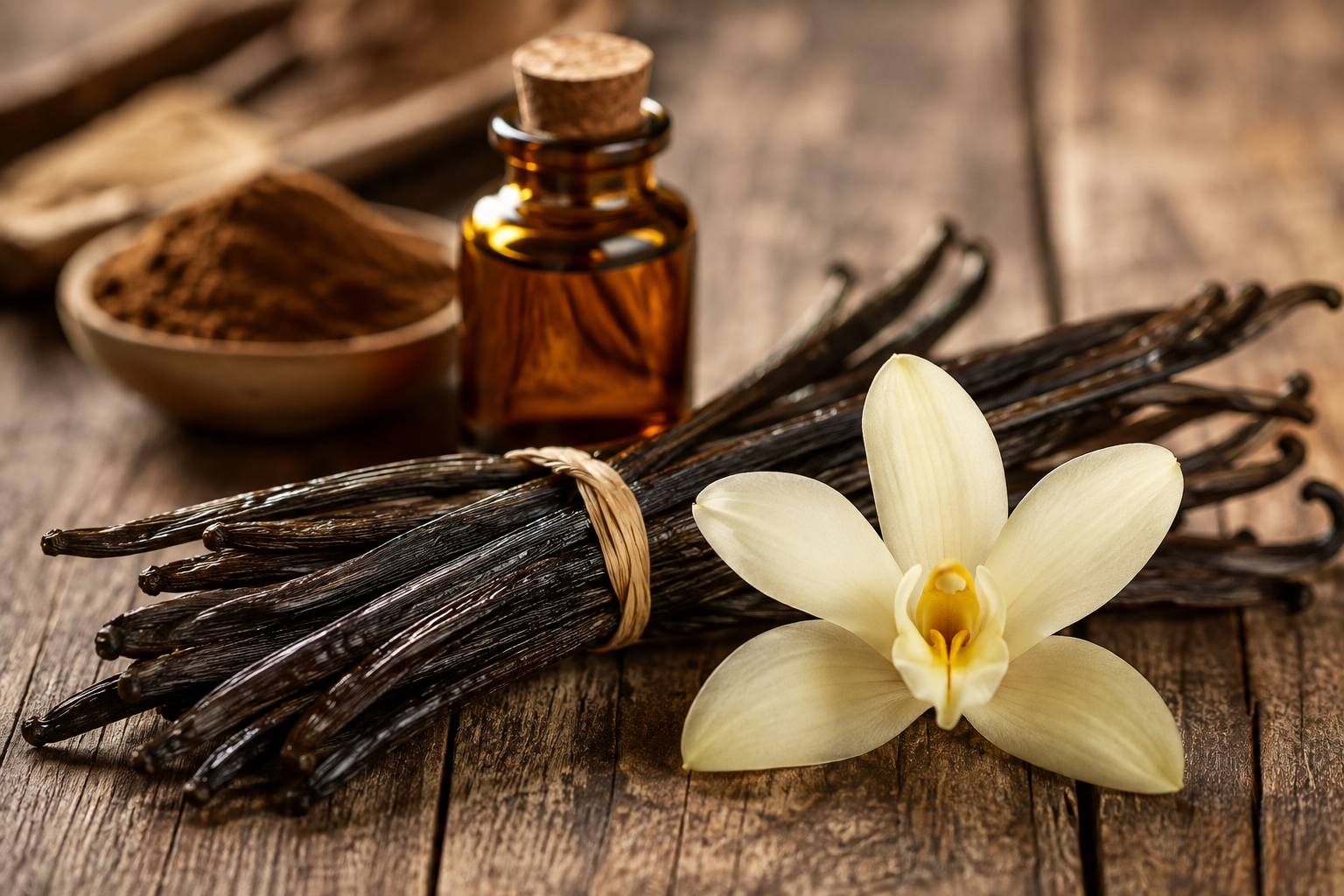
A vanilla bean isn’t just a pod filled with a single flavor – it’s a natural treasure chest of aromas waiting to be unlocked.
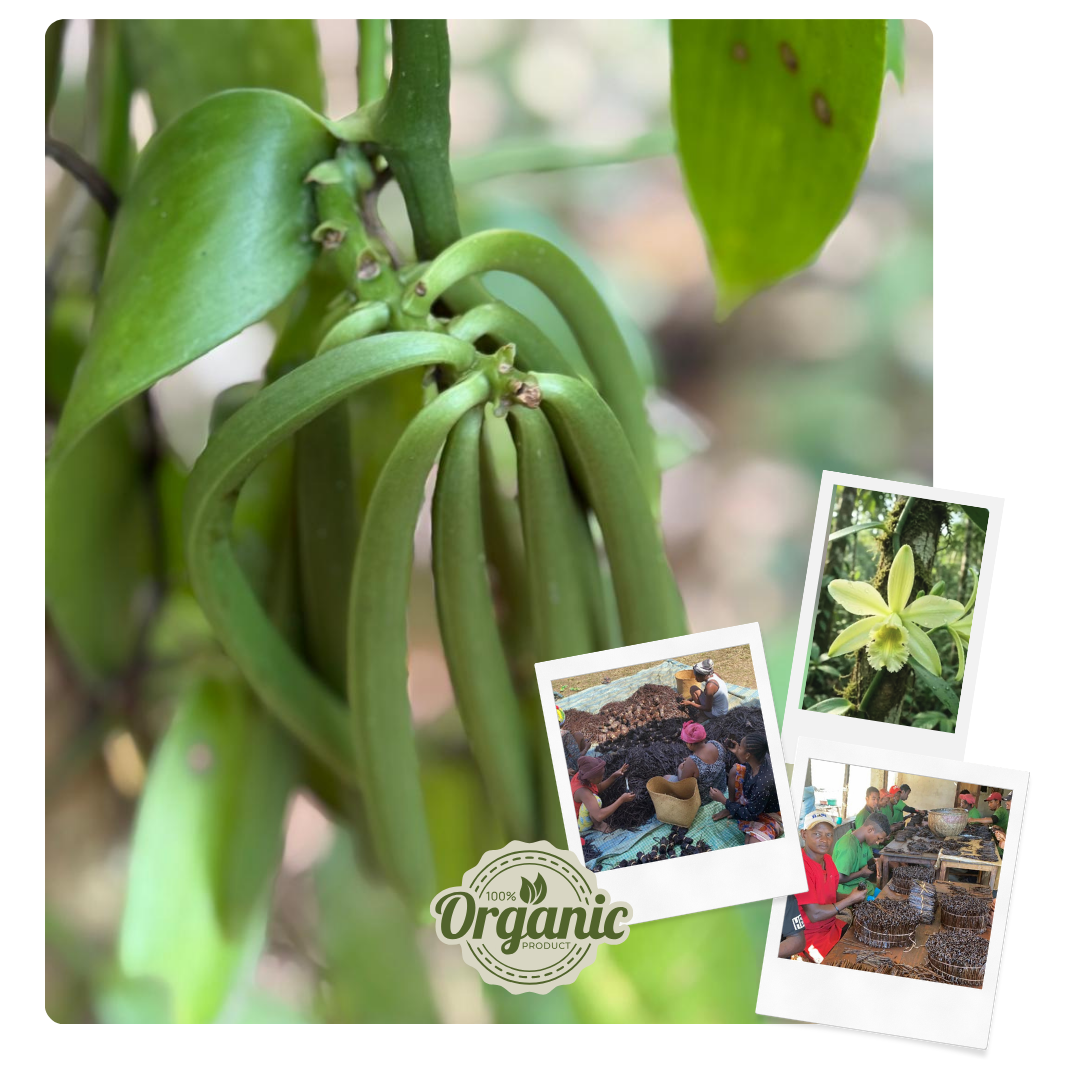
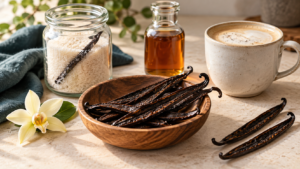
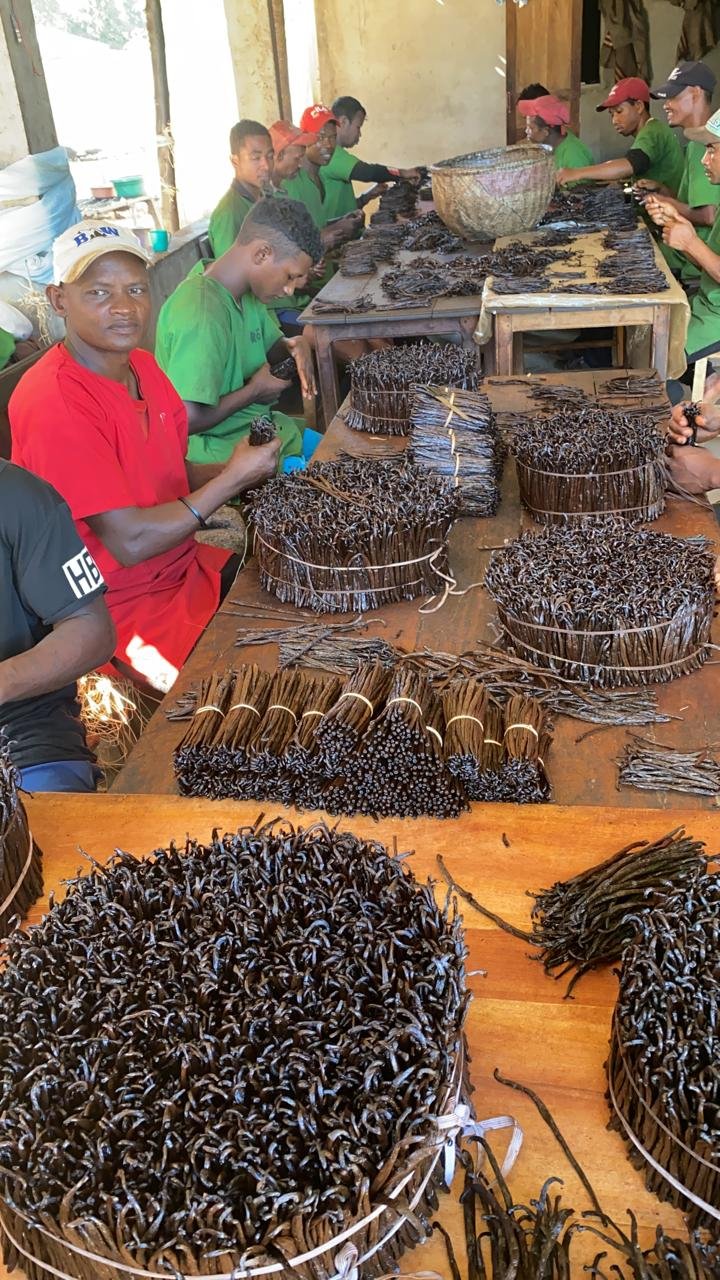
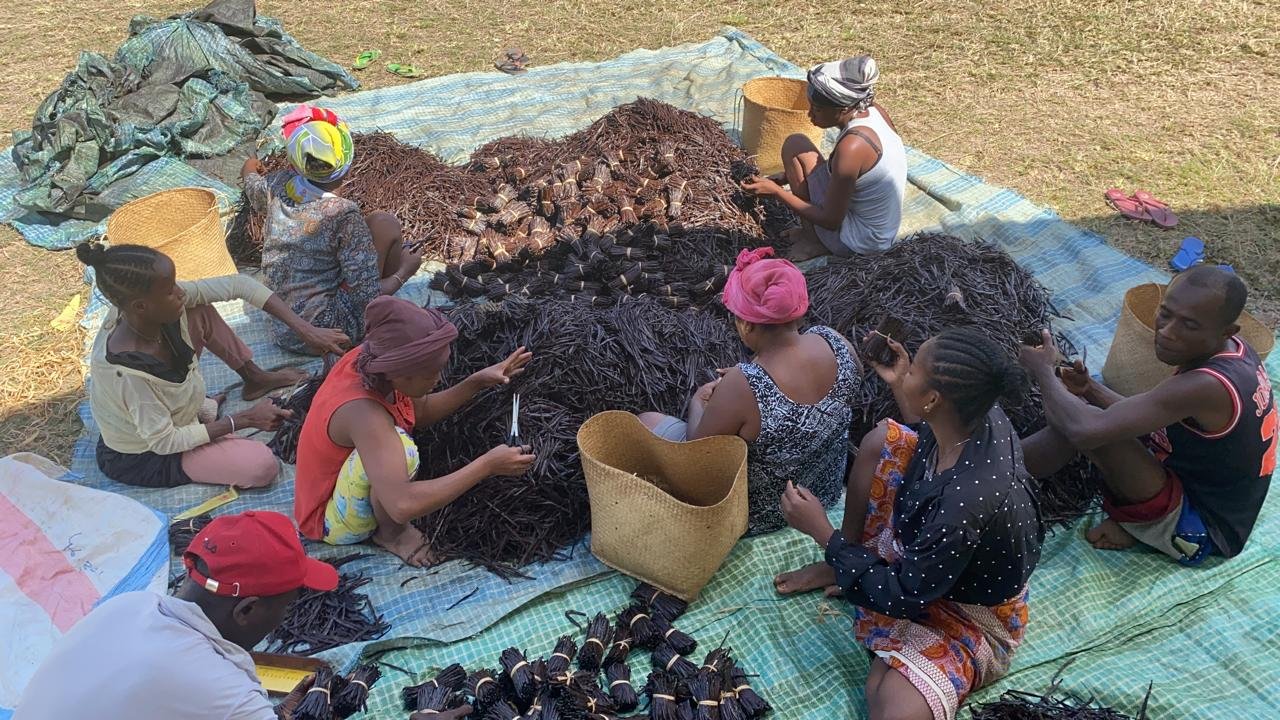
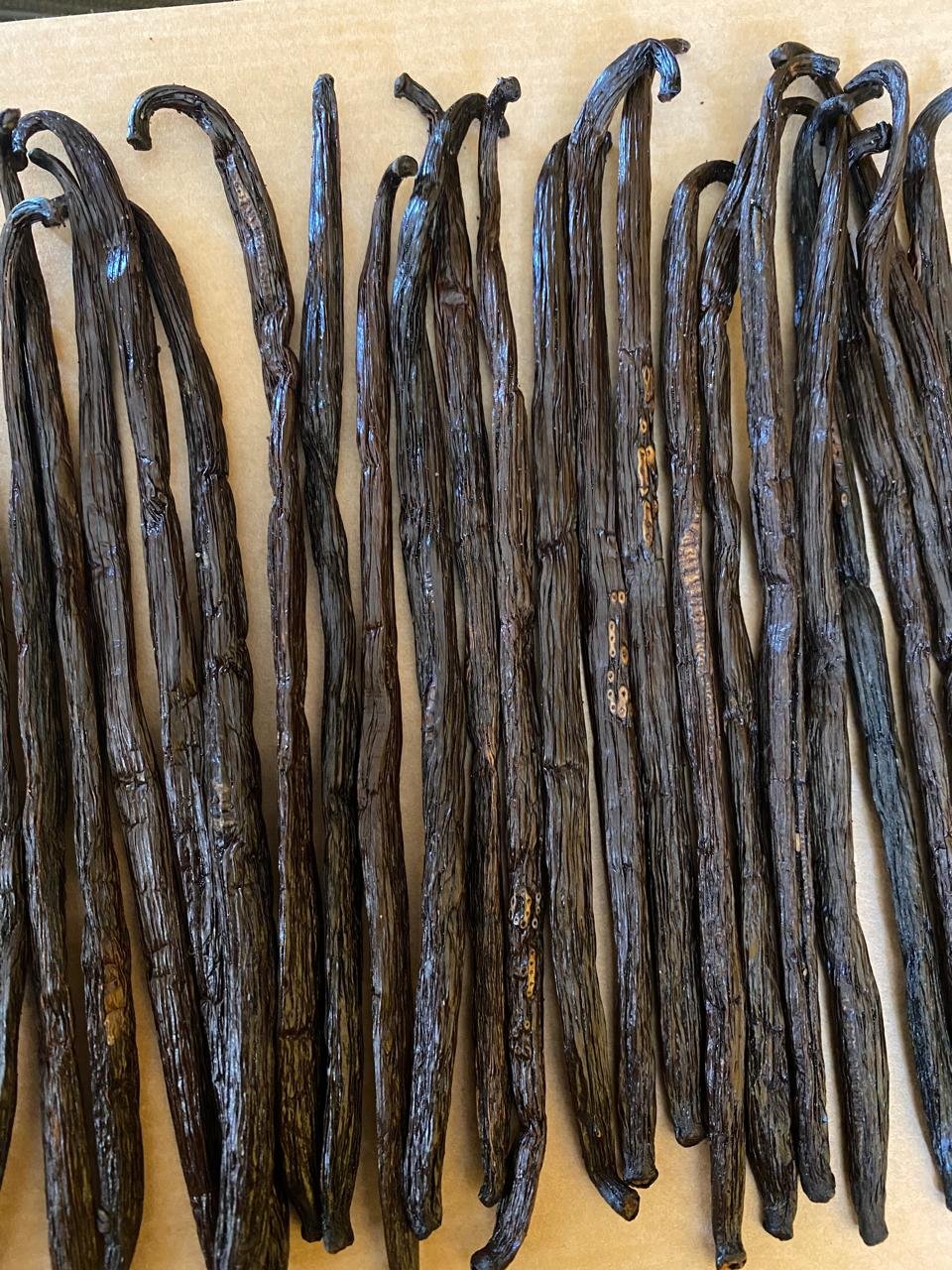
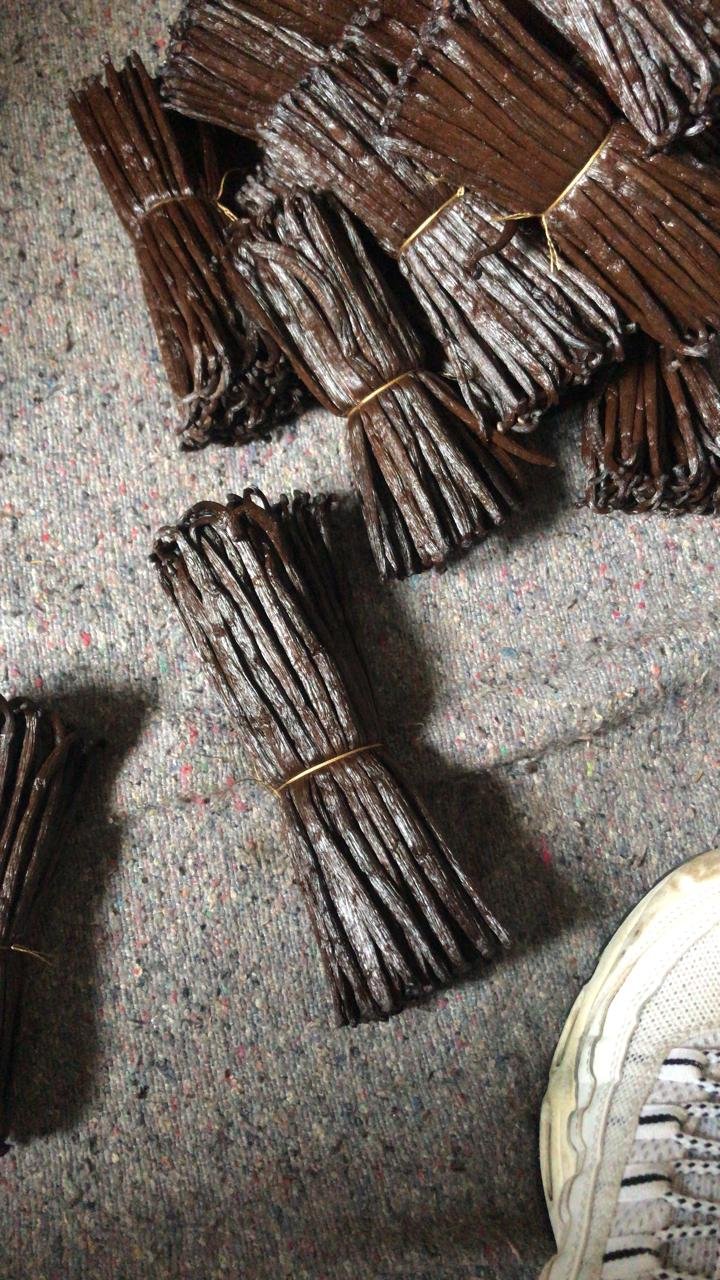
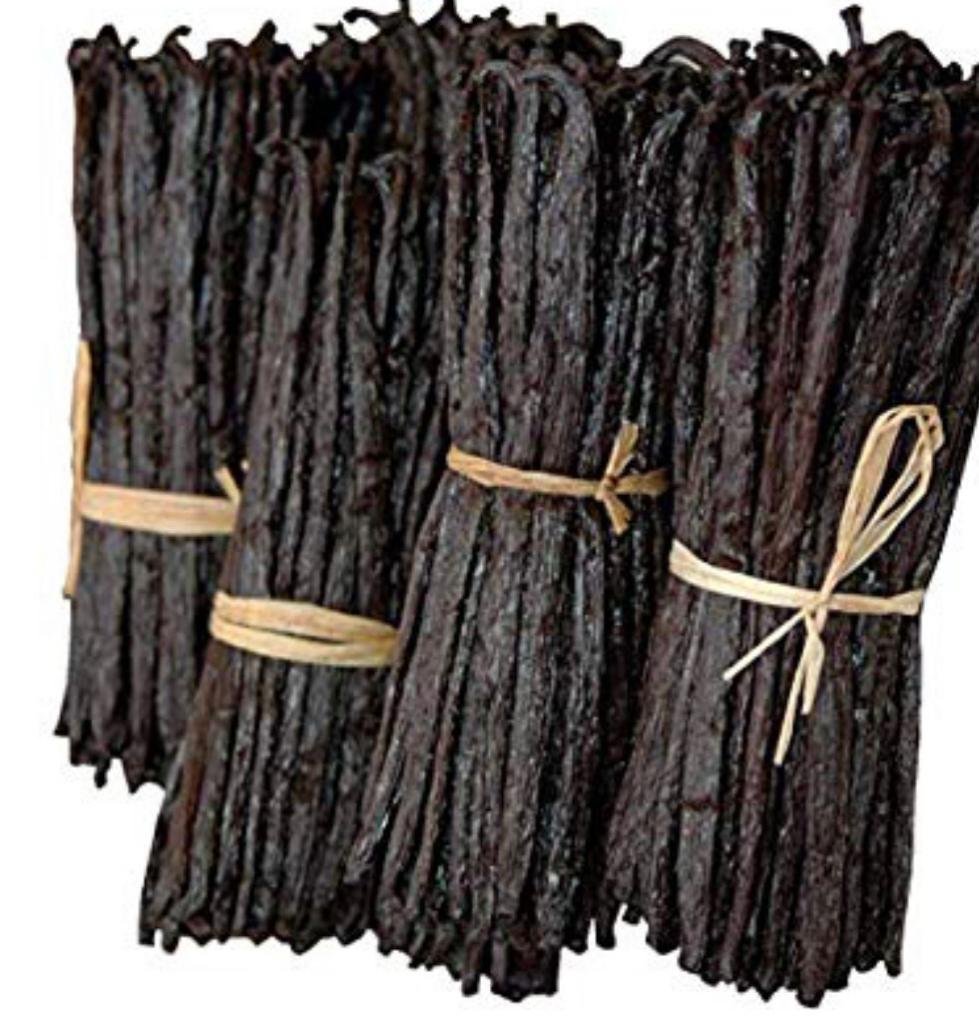
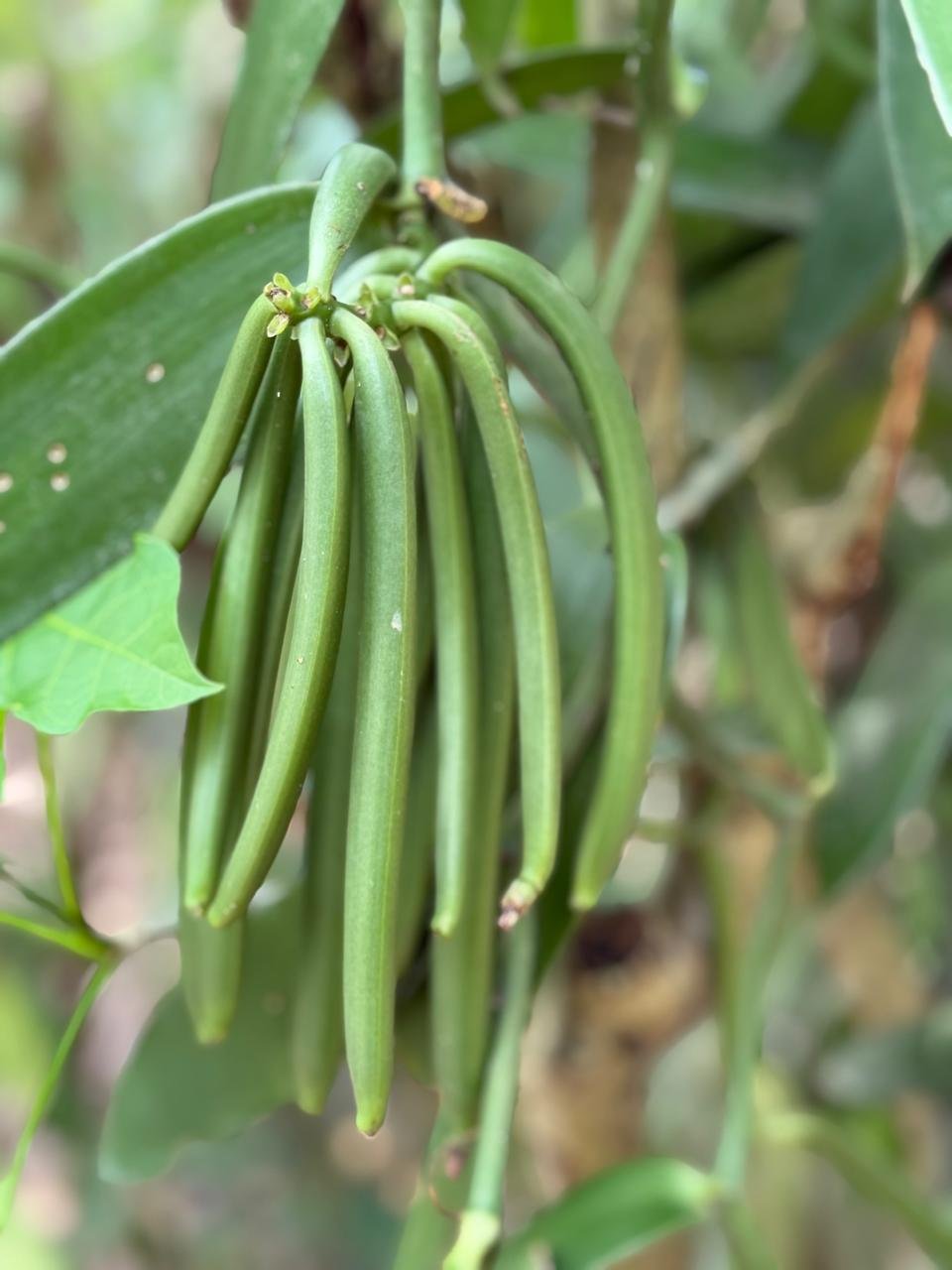
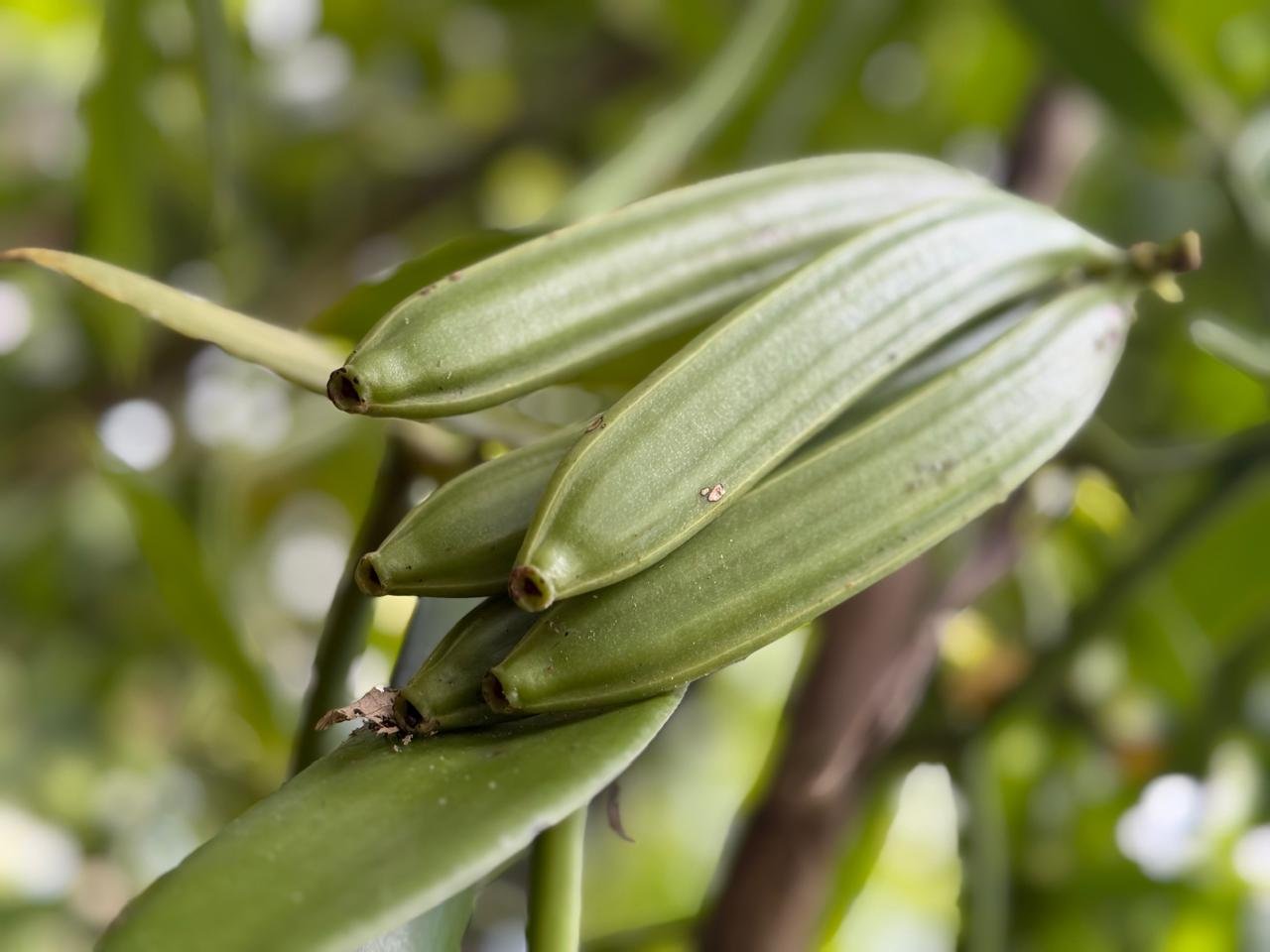
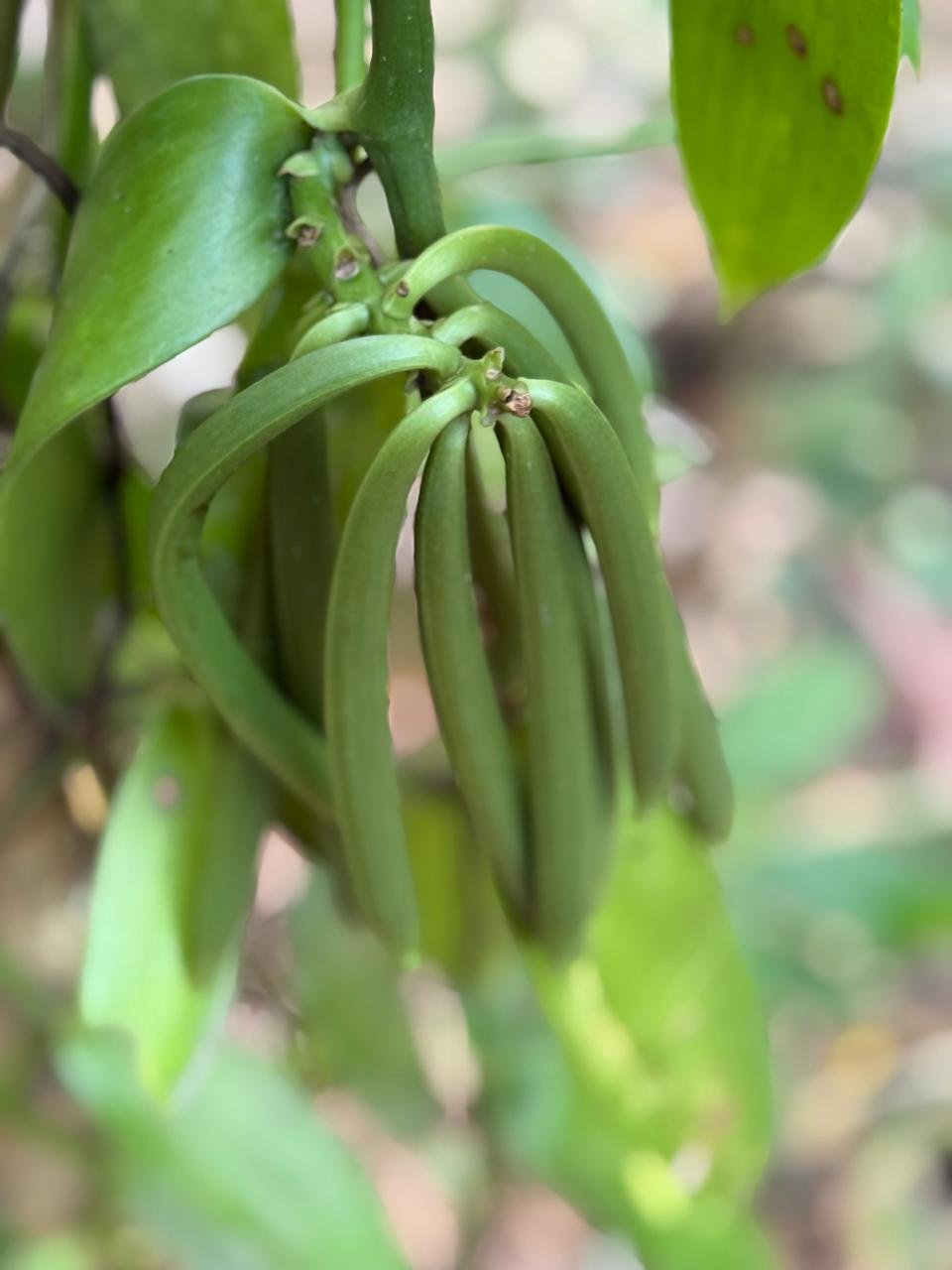
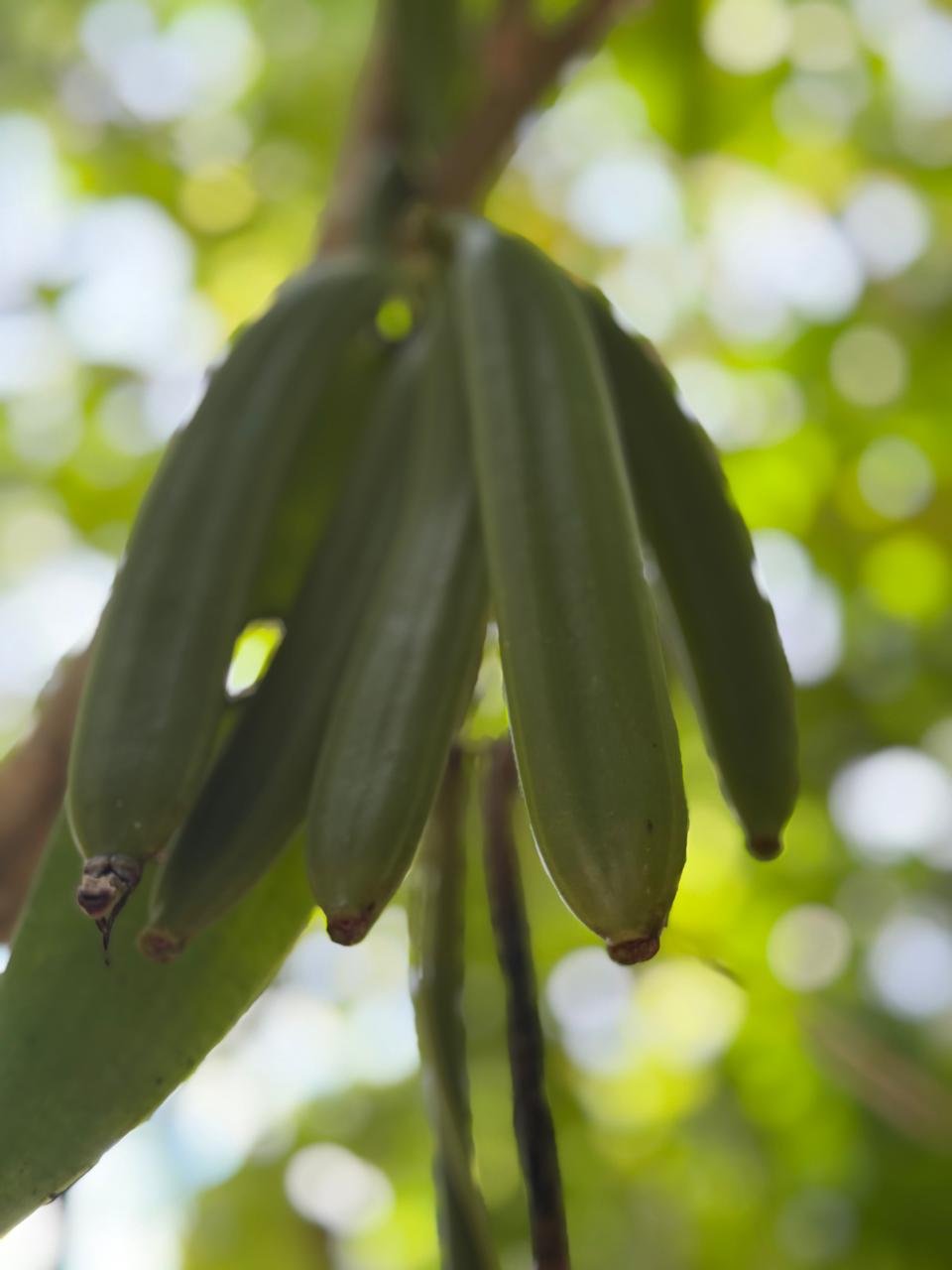
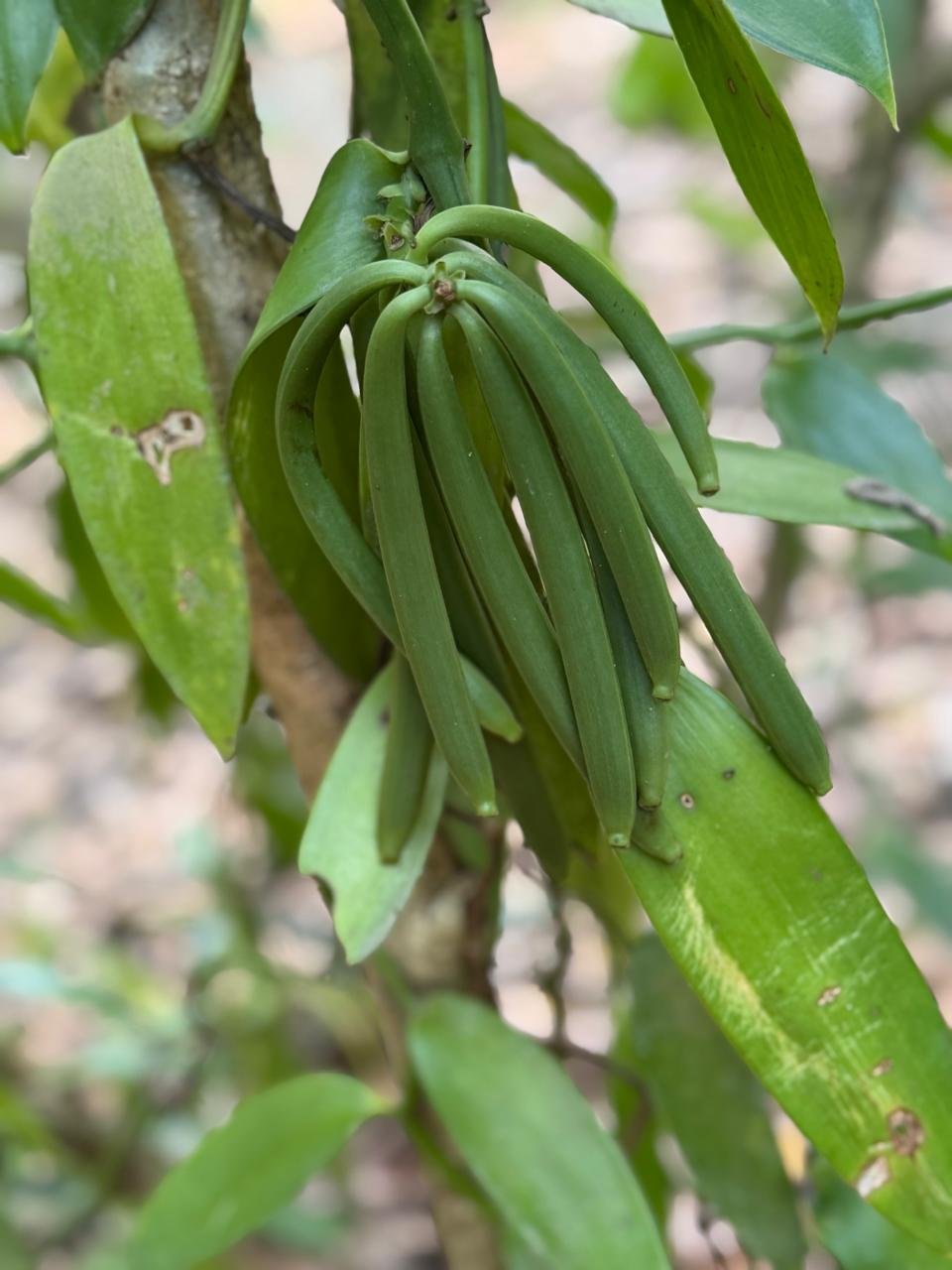
Unlike most spices, vanilla takes nearly nine months to develop after pollination. Once harvested, the beans don’t immediately smell like the vanilla we’re familiar with. They must go through a careful curing process that lasts four to six months. During this time, enzymes inside the beans break down natural compounds, creating hundreds of aromatic molecules that give vanilla its signature richness.
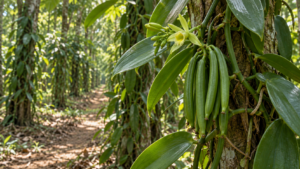
Even where the vanilla is grown influences its taste. Madagascar vanilla is celebrated for its creamy, classic sweetness. Indian vanilla often has bold chocolate-like and woody notes, making it ideal for rich desserts. Tahitian vanilla, on the other hand, is prized for its fruity and floral aroma.
Think of it like coffee. Beans grown in Ethiopia taste completely different from those grown in India because of differences in climate, soil, and processing. Vanilla develops its own regional personality in exactly the same way, giving every origin a distinctive flavor profile.
The Science Behind Real Vanilla Flavor
Many people believe vanilla’s flavor comes entirely from vanillin. While vanillin is the most recognizable aroma compound, it’s only one piece of a much larger puzzle.
According to research published in the Journal of Agricultural and Food Chemistry, cured vanilla beans contain more than 250 volatile compounds, each contributing its own unique character to the final flavor.
Some of the most important compounds include:
These compounds don’t work independently – they interact to create a balanced and evolving flavor experience.
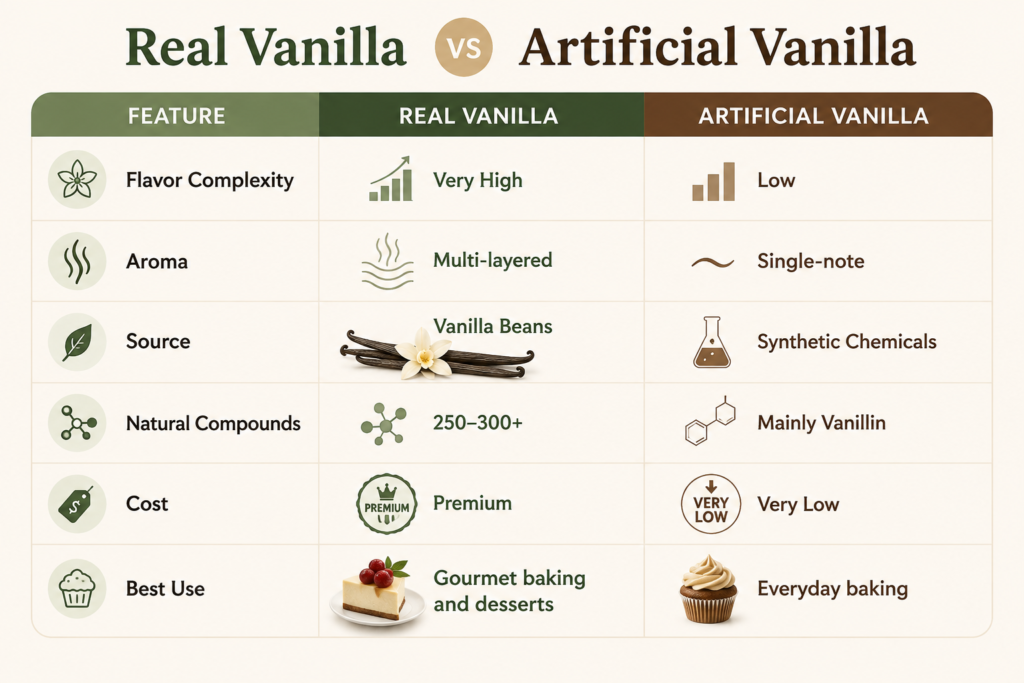
Artificial vanilla, however, is very different. Most imitation vanilla products rely almost entirely on synthetic vanillin, which accounts for 95–99% of the flavor. Without the supporting compounds found in natural vanilla, the flavor becomes flatter, one-dimensional, and often noticeably sweeter.
That’s why real vanilla doesn’t simply taste stronger – it tastes more complete.
Why does real vanilla taste better?
Imagine attending a concert where only one violin is playing. The melody might still be beautiful, but it lacks the richness and emotion of an entire orchestra performing together.
That’s the difference between artificial and real vanilla. Tips to identify real Premium Grade vanilla.
When food containing real vanilla is baked, chilled, or warmed, different aroma compounds are released at different temperatures. Some create creamy notes, while others contribute woody, fruity, buttery, or lightly smoky characteristics. This gradual release creates a layered tasting experience that changes from the first bite to the last.
Artificial vanilla cannot replicate this complexity because it depends almost entirely on synthetic vanillin. Instead of evolving on the palate, its flavor remains relatively constant.
Food scientists studying vanilla’s aroma profile continue to identify new volatile compounds responsible for its remarkable depth. Research published in the Journal of Agricultural and Food Chemistry highlights that this complex blend of naturally occurring compounds is what gives authentic vanilla its unmistakable character – something science still struggles to reproduce perfectly.
Why Is Imitation Vanilla So Cheap?
If you’ve ever compared the price of pure vanilla extract with imitation vanilla, you’ve probably wondered why the difference is so dramatic.
The answer lies in how they’re produced.
Vanilla is one of the world’s most labor-intensive crops. Every vanilla orchid flower opens for only a single day and must be hand-pollinated during that short window. Once harvested, the beans spend several more months curing before they develop the familiar aroma and flavor we enjoy.
Farmers also face unpredictable weather, fluctuating market prices, pests, and crop losses, making vanilla cultivation both time-consuming and risky.
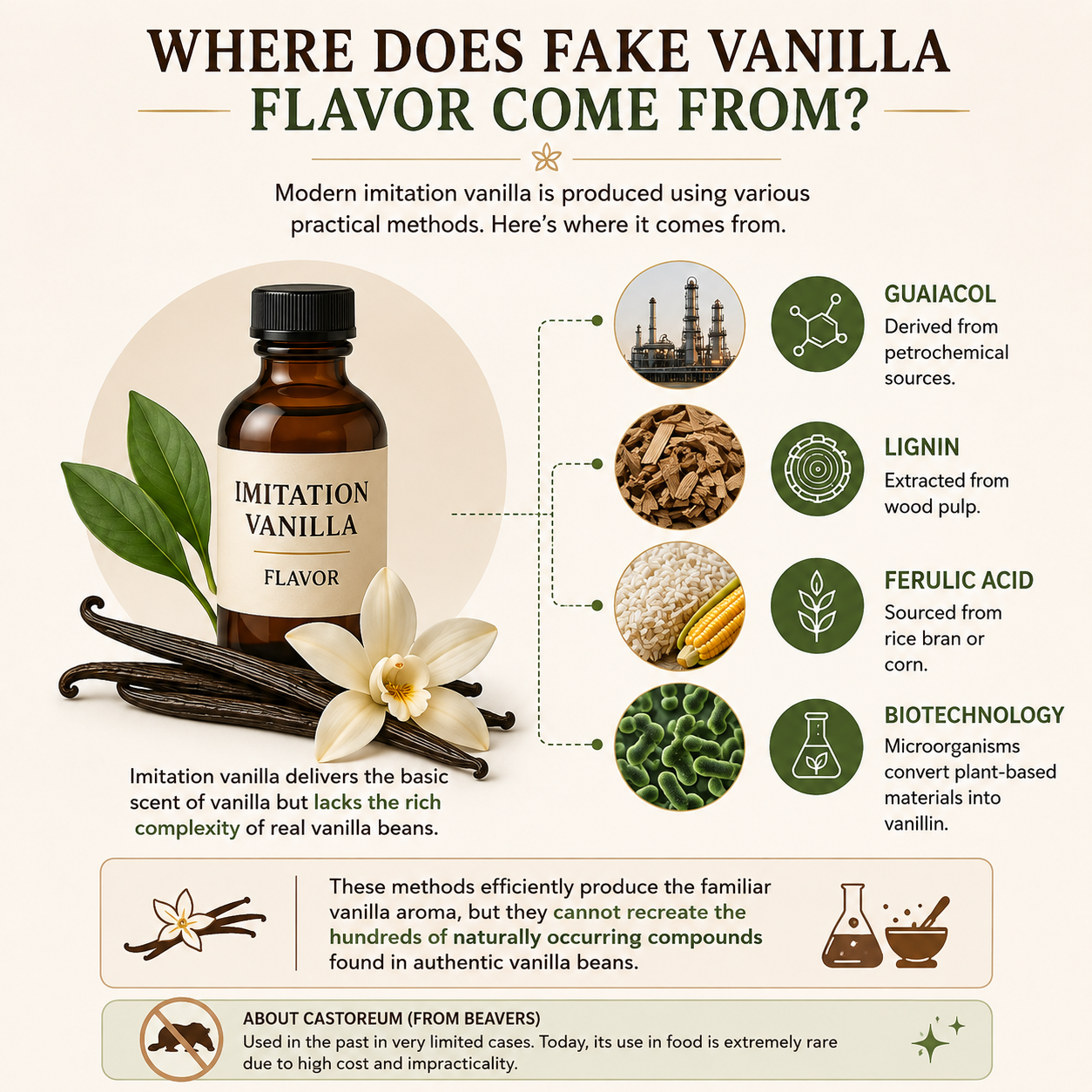
Imitation vanilla, by comparison, is manufactured using chemical synthesis in controlled factory environments. Modern synthetic vanillin is commonly produced from sources such as:
- Petrochemical derivatives
- Guaiacol
- Lignin extracted from wood pulp
- Ferulic acid obtained from rice bran or corn
Interestingly, synthetic vanillin was historically produced from lignin, a by-product of the paper industry. Today, most manufacturers rely on petrochemical precursors or advanced biotechnology, allowing large quantities of vanilla flavor to be produced quickly and at a fraction of the cost of genuine vanilla beans.
Is Imitation Vanilla Halal?
Whether imitation vanilla is halal depends on how it is manufactured, the ingredients used, and whether alcohol is present in the final product.
Many synthetic vanilla flavorings available today are halal certified because they are produced using plant-based or synthetic raw materials and comply with halal manufacturing standards. However, some vanilla flavorings – both natural and artificial – may use alcohol as a solvent during extraction or formulation.
If halal compliance is important to you, it’s always best to:
- Look for a recognised Halal certification on the packaging.
- Read the ingredient declaration carefully.
- Buy from reputable brands that clearly disclose their sourcing and manufacturing practices.
Quick FAQ
Real vanilla contains more than 250 naturally occurring flavor compounds that work together to create a rich, layered flavor. Artificial vanilla relies primarily on synthetic vanillin, making it taste simpler and more one-dimensional.
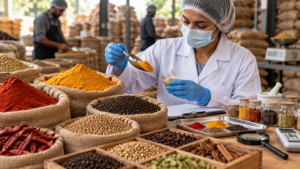
The primary compounds include vanillin, p-hydroxybenzaldehyde, guaiacol, anisaldehyde, acetic acid, and furfural, along with hundreds of other volatile compounds that contribute floral, smoky, buttery, fruity, and caramel-like notes.
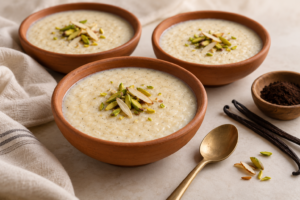
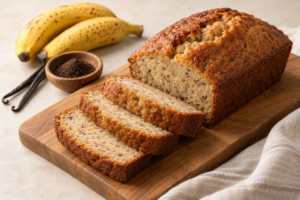
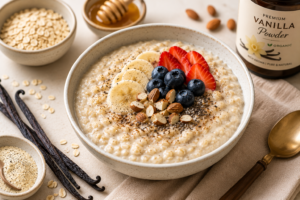
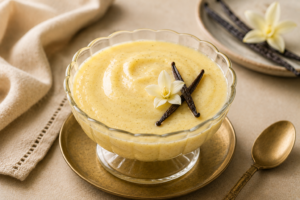
Yes. Real vanilla makes the biggest difference in desserts where vanilla is the primary flavor, such as ice cream, custard, panna cotta, cheesecake, and vanilla cake. In recipes dominated by chocolate or strong spices, imitation vanilla can be a suitable alternative.
Conclusion
Real vanilla isn’t expensive because it’s fashionable – it costs more because nature takes time.
From the delicate hand pollination of every orchid flower to months of careful curing, every vanilla bean represents patience, craftsmanship, and an extraordinary combination of more than 250 naturally occurring flavor compounds. That complexity is what gives real vanilla its creamy, floral, woody, fruity, and caramel-like notes qualities that artificial vanilla simply cannot reproduce.
Imitation vanilla certainly has its place in everyday baking, especially when budget matters. But when vanilla is the heart of your recipe, choosing authentic vanilla transforms an ordinary dessert into something truly exceptional.
The next time you open a bottle of pure vanilla bought ffrom Vrishabha Organics or split open a fragrant vanilla bean, remember that you’re experiencing one of nature’s most remarkable flavors – one that science can imitate but has never fully replicated.